
By Agrobroadcast Team
How Nigeria plans to transform its livestock industry
Nigeria’s livestock sector, despite its vast potential, has for decades remained largely underdeveloped, contributing less to the economy than its capacity suggests. Poor infrastructure, outdated production systems and frequent clashes between herders and farmers have also limited the industry’s growth.
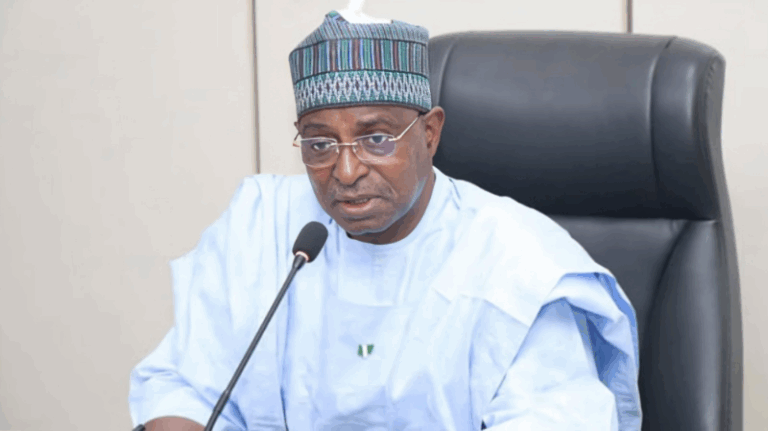
The Minister of Livestock Development, Idi Mukhtar Maiha, speaks on the Federal Government’s strategy to reposition the sector, promote ranching and unlock new opportunities across the livestock value chain.
Q: Stakeholders have often complained that the livestock sector was neglected compared to crop farming. Has the creation of a dedicated ministry changed anything?
Maiha:
Yes, the livestock sector experienced long years of neglect at both federal and state levels. For decades, it operated under the Ministry of Agriculture without the focused attention it needed.
The establishment of a separate ministry has changed that. For the first time, livestock development now has its own administrative structure, policy direction and a voice at the Federal Executive Council.
Nigeria’s livestock industry is estimated to be worth about $32 billion, yet it has not been fully integrated into the formal economy. Meanwhile, the country still spends around $1.5 billion every year importing dairy products, even though we have a large population of livestock that could support local production.
Nigeria currently has more than 50 million cattle, 124 million goats, 70 million sheep, 9.3 million pigs and over half a billion poultry birds. Our goal is to harness these resources and transform the sector into a modern, productive and globally competitive industry.
Q: What steps has the ministry taken since it was established?
Maiha:
Our first priority was to build the institutional structure needed to drive reforms. We assembled a technical team, reorganised staff and created additional departments to support specialised areas of livestock development.
We also developed a comprehensive roadmap known as the National Livestock Growth Acceleration Strategy. Through this initiative, we aim to expand the sector from $32 billion to about $72 billion over the next decade.
The strategy focuses on collaboration among the federal government, state governments, private investors and development partners.
Another encouraging development is the response from state governments. When the ministry was created in 2024, only three states had similar livestock-focused ministries. Today, that number has risen to 18 states, showing increasing commitment to livestock development nationwide.
Q: What roles will the different stakeholders play in developing the livestock sector?
Maiha:
The federal government provides policy direction, regulation and coordination. However, land and many livestock resources belong primarily to states and private producers.
Because of this, we are working closely with state governments to harmonise policies and encourage investment across the entire livestock value chain.
Nigeria is naturally endowed with a wide range of livestock resources from poultry and cattle to sheep, goats, pigs and even honey production. Each state has unique advantages, and our approach is to help them build on those strengths rather than impose a uniform model.
We are also engaging investors who are interested in areas such as dairy production, feed and fodder cultivation, animal health services and leather processing.
Q: In the past, some states resisted federal livestock initiatives. Has that attitude changed?
Maiha:
Yes, cooperation has improved significantly. The creation of this ministry has reassured states that the Federal Government is serious about developing the sector.
Rather than imposing policies, we are encouraging states to identify their comparative advantages and develop them. For instance, states with extensive forest areas may focus on honey production, which requires relatively low capital but has strong economic potential.
The important thing is that every state has something to contribute to the livestock economy.
Q: What is the ministry doing to raise awareness about opportunities in the livestock sector?
Maiha:
Public awareness is essential. We are engaging the media, industry stakeholders and pastoral groups to ensure that Nigerians understand the opportunities within the sector.
We recently held discussions with the dairy sub-sector group of the Manufacturers Association of Nigeria, and we have also consulted with 34 pastoral organisations across the country.
These engagements are aimed at building trust and ensuring that producers understand the benefits of the reforms being introduced.
Q: Ranching has been widely proposed as an alternative to open grazing, but many herders say it is too expensive. What is your response?
Maiha:
The reality is that open grazing is no longer sustainable in today’s Nigeria.
In the past, there were vast areas of land available for grazing and the population was much smaller. But today, the country has expanded significantly, with major cities, infrastructure projects and large-scale farms occupying land that was once used as grazing routes.
Climate change has also affected natural pastures and water sources. As a result, the traditional system of moving cattle from one location to another often leads to conflicts and environmental challenges.
That is why we are promoting a National Ranching Strategy as a more sustainable solution.
Q: How will the ranching strategy be implemented?
Maiha:
Nigeria has about 417 grazing reserves, many of which have been neglected over the years. Our plan is to rehabilitate these reserves and convert them into modern ranching facilities.
Livestock producers will be able to lease land within these reserves to establish ranches.
The government will support them by providing essential infrastructure such as water facilities, pasture development and training.
We are also introducing improved livestock genetics to boost productivity. For example, traditional cattle may produce only one or two litres of milk daily, but improved breeds can produce 15 to 30 litres per day.
Better breeding will also allow animals to grow faster and reach market weight earlier, improving profitability for livestock farmers.
Ranching also makes disease control easier because animals are managed within defined locations rather than constantly moving across regions.