
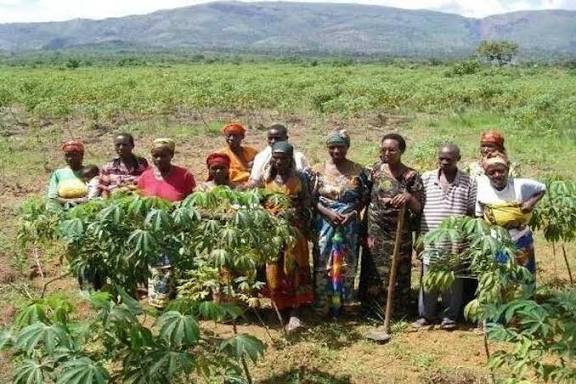
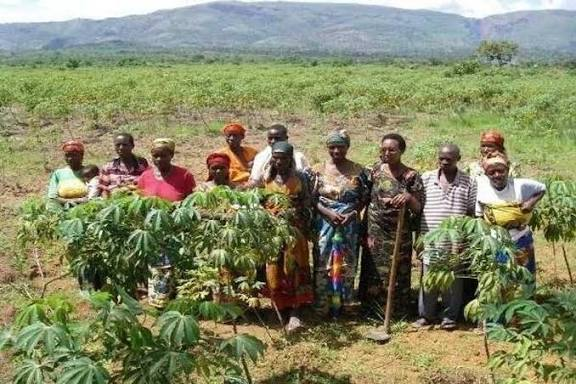
A coalition of women farmers in Borno State has called on government at all levels to invest in agroecology-friendly initiatives and climate-resilient agriculture to strengthen rural livelihoods and improve market access for environmentally sustainable farm produce.
The call was made during an event titled “Strengthening the Network of Actors for the Promotion of Agroecology”, organised in Maiduguri by the Centre for Advocacy, Transparency and Accountability Initiative (CATAI) with support from ActionAid Nigeria.
Speaking at the event, Blessing Ifemenan, Programme Advisor at ActionAid Nigeria, said the initiative seeks to build a more coordinated movement that will improve the visibility and market reach of agroecological products across Borno State. She explained that women farmers have been receiving training on climate-resilient agricultural practices aimed at helping them transition from harmful traditional methods to sustainable and organic farming systems.
“Climate change has come with significant impact,” she said. “So, we are training women farmers on sustainable agriculture, organic pesticides, composting and smart farming techniques that protect the environment rather than harm it.”
Ifemenan emphasised that the shift to agroecology is essential for boosting yields, improving soil health and ensuring that women farmers, who form the backbone of local food production, can adapt to changing weather conditions.
Despite their pivotal role in household food security, women farmers across Borno continue to face severe climate-related challenges. Representing the farmers, Aishatu Isa disclosed that unpredictable rainfall, extended dry spells and recurring floods have worsened farming conditions in communities such as Bama, Gwoza and Konduga.
“Our biggest challenge is that we lack the basic agroecological knowledge that can help us adapt,” she said. “Most women still depend on traditional practices that no longer work. We need training on soil health, improved seeds, composting and simple irrigation techniques.”
Another farmer, Sa’adatu Sani, noted the lack of access to early-warning systems and advisory services that could guide planting decisions and reduce losses. She urged authorities to bring support closer to rural women, adding that the little assistance reaching communities is insufficient to tackle the fast-changing climate.
Sani commended CATAI and ActionAid for their recent capacity-building programmes, describing the training as both timely and crucial for the survival of smallholder women farmers.
The coalition argued that agroecological knowledge would not only improve climate adaptation but also enhance the market value of their produce. Although agroecological products grown without chemicals are attracting global demand, many rural women in Borno lack the infrastructure, linkages and visibility needed to access profitable markets.
Participants at the event stressed the need for more investments in access roads, storage facilities, transportation and local processing centres to enable farmers from remote communities to move their produce to major markets within and outside the state.
Ibrahim Abdulkadir, Project Lead for the Strategic Partnership Agreement II (SPA2), described the forum as a learning platform and a space for stakeholders to develop solutions that are environmentally sustainable, economically viable and socially just. He said improved knowledge of agroecology would enable women to produce a wider range of nutritious and culturally appropriate foods, ultimately reducing dependence on external markets.
Abdulkadir also called for an expansion of extension services into rural areas, noting that women farmers must be equipped with climate-responsive skills to withstand shocks from both environmental changes and insecurity.
The group urged government agencies to scale up climate-focused extension services and improve market infrastructure; research institutes to support community-based training on organic farming; development partners to invest in processing, storage and transport; and local authorities to prioritise women farmers in agricultural support programmes.
They maintained that without adequate knowledge, market access and supportive policies, the transition to sustainable practices will not translate into improved incomes or food security for rural women.