
By Agrobroadcast Team
Nigeria and the United States have signalled a renewed push to expand economic cooperation, identifying agriculture, the digital economy and infrastructure as strategic areas for deeper trade and investment engagement.
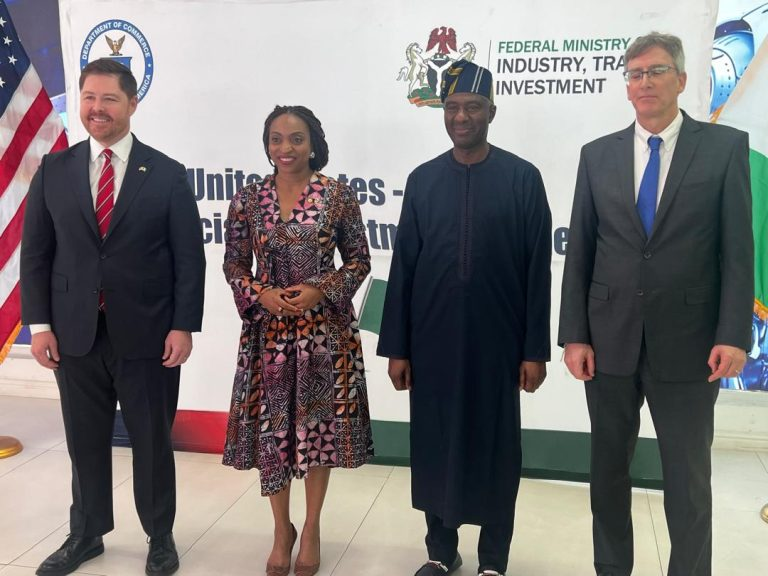
The renewed focus emerged at the United States Nigeria Commercial and Investment Partnership (CIP) ministerial meeting held in Lagos, where senior government officials and private sector leaders from both countries reviewed progress and outlined next steps to strengthen commercial ties.
Officials at the meeting said the partnership is designed to translate private sector recommendations into practical government action, with the aim of improving market access, encouraging investment and supporting business growth on both sides.
The Deputy Assistant Secretary for the U.S. Commercial Service at the U.S. Department of Commerce, Bradley McKinney, said the priority sectors were selected based on extensive consultations with businesses operating in both economies.
According to him, the working groups under the CIP framework identified agriculture, digital technology and infrastructure as areas with strong comparative advantages and immediate commercial potential.
“We are intent on strengthening two-way trade and investment with Nigeria by implementing recommendations jointly developed with the private sector,” McKinney said.
“These are practical, results-driven proposals, and both governments are committed to following through on them.”
He stressed that the process was largely private sector–led, noting that businesses from both countries helped shape the agenda by highlighting sectors where policy alignment and targeted reforms could unlock growth.
Also speaking, Nigeria’s Minister of Industry, Trade and Investment, Dr. Jumoke Oduwole, described the meeting as both timely and consistent with the economic reform priorities of the Bola Ahmed Tinubu administration.
Oduwole said the ongoing engagement with U.S. government agencies and investors reflects Nigeria’s determination to create a more competitive and investment-friendly economy.
“The focus on infrastructure, agriculture and the digital economy mirrors Nigeria’s reform direction and areas where collaboration can attract capital, strengthen businesses and position Nigeria as a regional trade hub,” she said.
She added that Nigerian firms are seeking improved access to international markets, deeper cooperation in goods and services trade, and stronger partnerships in technology and infrastructure development.
The minister linked the partnership to the Renewed Hope Agenda, noting that expanding non-oil exports remains a key policy objective, and that the selected sectors align closely with Nigeria’s diversification drive.
Participants at the meeting expressed optimism that sustained engagement under the CIP framework would translate policy discussions into tangible investments, improved trade flows and long-term economic benefits for both countries.