
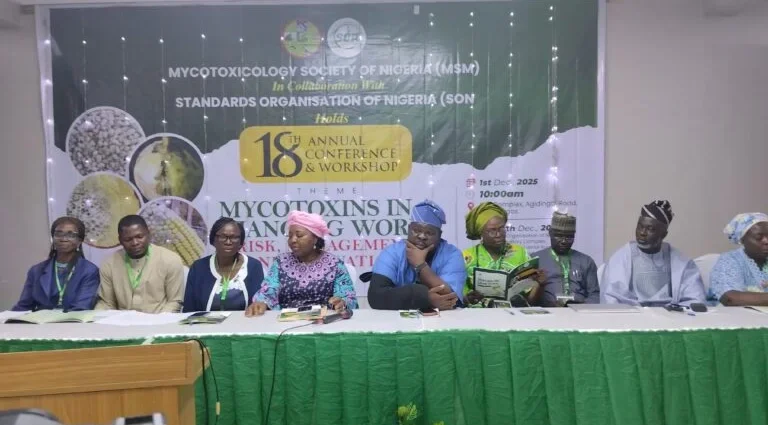
The Standards Organisation of Nigeria (SON) and the Mycotoxicology Society of Nigeria (MSN) have strengthened collaboration to improve early detection and prevention of mycotoxins in agricultural produce nationwide.
At the 18th annual MSN conference, hosted by SON on Monday in Lagos, farmers and key stakeholders received training on mycotoxin risk management. The event, themed “Mycotoxins in a Changing World: Risk, Management and Innovations,” highlighted the growing threat posed by toxic compounds produced by certain moulds.
Mycotoxins—such as aflatoxins and fumonisins commonly found in cereals, nuts, and dried fruits—pose significant health risks to both humans and animals. Exposure can occur through food consumption, inhalation, or direct contact, leading to illnesses ranging from mild poisoning to long-term conditions such as cancer.
MSN National President, Prof. Yemisi Jeff-Agboola, represented by Dr. Danladi Abba, emphasized the need for collective action. He noted that climate change and evolving environmental conditions are altering fungal behaviour, increasing the risk of contamination in food and feed.
“This gathering is more than an academic meeting; it is a united effort toward protecting our nation’s health,” he said. He stressed that advancements in detection tools, monitoring systems, and surveillance technology are crucial to improving response and safeguarding the food system.
Prof. Jeff-Agboola also called for stronger regulatory standards, updated policies, and effective communication strategies to protect consumers and markets from mycotoxin-related hazards. He added that innovative monitoring strategies across agricultural value chains would help reduce contamination at the source.
Also speaking, Folashade Oluwabamiwo highlighted the growing impact of climate change on food safety. She noted that fluctuating temperatures, unpredictable rainfall, and frequent droughts are creating favourable environments for toxin-producing fungi.
“This is no longer the time to react after contamination occurs,” she said. “Our strategies must be proactive, adaptive, and technologically advanced. The future belongs to those who innovate and collaborate to protect communities and food systems.
”In his remarks, Mr. Sakin Agbayewa, Deputy Chairman of the All Farmers Association of Nigeria, urged farmers to adopt the knowledge shared at the conference.
“Mycotoxin contamination is a serious issue,” he said. “We must protect our health and ensure that our harvests do not end up causing more harm than good. Learning and applying these practices is essential for a healthier farming community and a safer nation.”