
By Agrobroadcast Team
As global demand for alternative protein sources accelerates, stakeholders in Nigeria’s agricultural sector are urging farmers to position themselves strategically within the fast-growing edible snail industry, projected to be worth $4.55 billion by 2033.
Chairman of the Board of Trustees, Federation of Agricultural Commodity Association of Nigeria (FACAN), Dr. Victor Iyama, said the sector offers a low-risk, high-return opportunity for Nigerians seeking viable agribusiness ventures. The market, currently valued at $2.46 billion, is expanding at a compound annual growth rate (CAGR) of eight per cent.
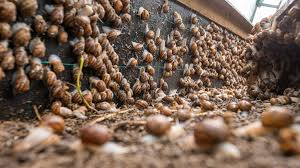
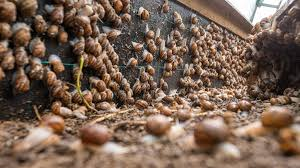
According to Iyama, snail farming remains largely underexploited despite its profitability and modest capital requirements. He described heliculture as an accessible enterprise that can be started on a small scale, even within residential premises.
“It is not capital intensive and can be started small.
Even retirees can invest part of their benefits into it. With the right environment cool surroundings and access to water snails thrive and reproduce rapidly,” he said.
Nigeria already plays a significant role in the global snail supply chain, producing over 45,000 metric tons annually, largely through wild harvesting.
This makes the country Africa’s largest supplier. However, industry observers note that much of this output remains undocumented due to the limited scale of organised commercial farming.
Iyama added that snail farming presents a practical alternative for investors reluctant to venture into arable crop cultivation or large-scale livestock operations such as cattle, sheep or goat rearing. Compared to conventional livestock, he noted, snails are easier to manage and less demanding.
Export performance has also strengthened in recent years. Nigeria recorded its fastest export growth in 2020, with shipments reaching 164 tons in 2023. Since 2020, exports have grown at an annual rate of 20.7 per cent, with key destinations including the United Kingdom and the United States.
Data from Cognitive Market Research indicates that Europe remains the dominant consumer market. France leads global imports at approximately $21 million annually, followed by Spain ($12 million), Italy ($6.5 million), Romania ($6 million) and Portugal ($4 million).
The United States is projected to account for 20.57 per cent of the global market in 2025, while Germany holds 6.32 per cent and the United Kingdom 5.62 per cent.
China commands 8.39 per cent of the market, and India is recording the fastest regional growth rate at 9.94 per cent. The Asia-Pacific region overall is emerging as the fastest-growing market, driven by rising disposable incomes and changing culinary preferences.
Market analysts attribute the sector’s expansion to increasing demand for gourmet and exotic foods, heightened awareness of snails’ nutritional benefits, and advancements in modern snail farming techniques.
Snails are rich in protein, iron and essential fatty acids, while remaining low in fat, positioning them as a healthy alternative protein source.
Globally, the snail industry covers farming, processing and marketing in multiple product formats, including fresh, frozen, canned and dried varieties.
Morocco currently dominates global production with an estimated 18,000 tons annually representing 35 per cent of global output and 82 per cent of Africa’s supply.
The country exported snails valued at $10 million in 2023, followed by Turkey at $7 million and several European producers.
Africa contributes more than 65,000 metric tons to global output, with Nigeria accounting for the largest share through wild harvesting. Ghana follows with approximately 8,700 metric tons annually.
To maximise its competitive advantage, experts recommend that Nigerian producers deepen export partnerships with European Union buyers, invest in processing facilities that meet international food safety standards, adopt Good Agricultural Practices, pursue sustainability certifications and strengthen cold-chain infrastructure in major producing states.
Industry leaders maintain that with proper organisation and commercialisation, snail farming could evolve from a largely informal activity into a structured, export-driven value chain capable of generating significant income and employment opportunities.