
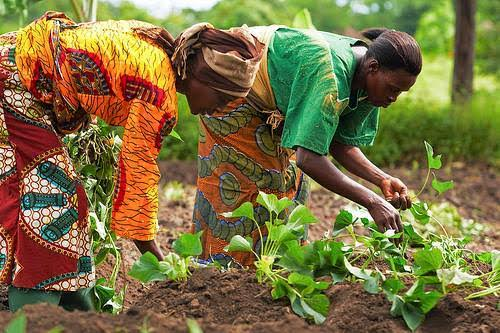
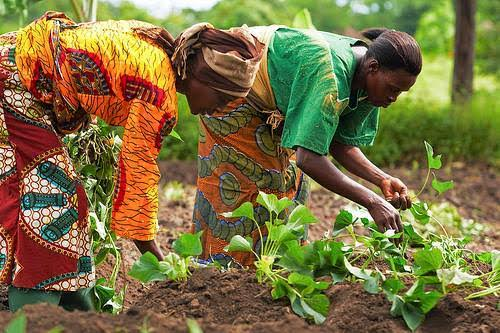
When the sun rises over rural communities across the Federal Capital Territory (FCT), thousands of women step onto their farms with hoes balanced on their shoulders and determination written across their faces. They are the silent workhorses behind Nigeria’s food system planting, weeding, harvesting, processing, and selling. Yet, behind these daily routines lies a story rarely told: the violence they face simply because they are women trying to feed the nation.
This hidden struggle came to the fore again in Abuja, where the Small-Scale Women Farmers Organisation in Nigeria (SWOFON) convened a powerful gathering titled “Orange the Farms” as part of the global 16 Days of Activism Against Gender-Based Violence (GBV). It was more than an event. It was a solemn call for justice, equality, and safety in fields where women’s sweat sustains millions.
At the centre of this campaign is Mrs. Hajara Ramson, a Programme Officer with SWOFON, whose passionate voice has become a rallying point for women farmers across Nigeria. Standing before a room of community leaders, civil society groups, development partners, and rural farmers, she laid bare the truth many ignore.
“Women farmers are the backbone of food production in Nigeria,” she said firmly. “But many of them face discrimination, unequal access to resources, harassment and unsafe environments. Violence against them is a direct threat to food security, family well-being and national development.”
Her words hung heavy in the air. Not one person in the room could deny the reality.
The stories shared by women farmers during the dialogue painted a painful but important picture. For some, violence begins at home husbands withholding money for seeds, or in-laws denying them access to family farmlands.
For others, it happens in the community male farmers chasing them away from communal plots, or market thugs harassing them while transporting produce.
And for many others, the violence is subtle but brutal: extension officers ignoring them in training sessions, input distributors giving priority to men, and local leaders refusing to listen when they complain. People think violence is only when you’re beaten,” one woman said, her voice cracking. “But economic violence hurts the same. If you’re denied access to land or inputs, how do you survive?”
According to SWOFON, women in rural and semi-urban parts of the FCT experience physical, emotional, economic and even digital violence, all of which limit their productivity and dignity. Experts warn that leaving these issues unresolved will have devastating consequences for Nigeria’s food system.
Women produce as much as 70% of the food grown in rural communities, yet they remain at the bottom of the agricultural ladder. Many work long hours but earn the least, own almost no land, and lack access to credit or technology.
“When women farmers are safe, our farms grow. When they thrive, communities flourish,” Ramson emphasised. “But when violence scares them away from farmlands, it affects every household that depends on affordable food.”. That message was echoed repeatedly throughout the event:
Protecting women farmers is not just about human rights it is about national survival.
The Abuja dialogue, organised by SWOFON FCT Chapter in collaboration with ActionAid Nigeria, brought together voices from all corners of the agricultural and development sectors.
There were elderly women who had farmed for 40 years, young women entering agriculture for the first time, and community leaders who have seen the system change and sometimes fail them.
One farmer from Kuje narrated how she was beaten by men who wanted to take over her farm after her husband died. Another from Bwari spoke of losing three harvests because a local chief refused to allocate her land unless she paid an illegal levy.
Every story provoked a mix of anger and determination from the audience. It was clear: the fight was far from over.
Beyond the emotional testimonies, the event also focused on the role of policy and governance.
Stakeholders called for gender-sensitive agricultural programmes
Enforcement of laws protecting women from violence,equal access to land, credit and farm inputs.Trained community support systems for survivors,safer farm environments monitored by security agencies,stronger involvement of men as allies, not obstacles.
The need for community-based support systems stood out strongly. Without safe reporting channels, many cases of violence never see the light of day. Why “Orange the Farms” The global theme of “Orange” symbolises a brighter future free from violence. But in Nigeria, it has a deeper meaning: fields where fear and intimidation once ruled should be replaced with hope, justice, and equality.
For SWOFON, “Orange the Farms” means:farms where women work without fear,communities where women’s voices matter,policies that recognise women’s contributions,systems that hold perpetrators accountable,It is a movement for a future where seeds planted by women are not watered with fear. A future worth fighting for as the dialogue drew to a close, Ramson’s final words lingered:
“Let us use these 16 days and beyond to speak up, support survivors, challenge harmful norms and build a future where every woman farmer can live and work free from violence.”For the women in the room, it was both a call to action and a reminder that they are not alone. For Nigeria, it was a warning: the nation cannot achieve food security while those who produce the food battle violence in silence. And for the rest of society, it was a challenge to see the women behind the meals we eat every day and join the fight to protect them.