
By Agrobroadcast Team
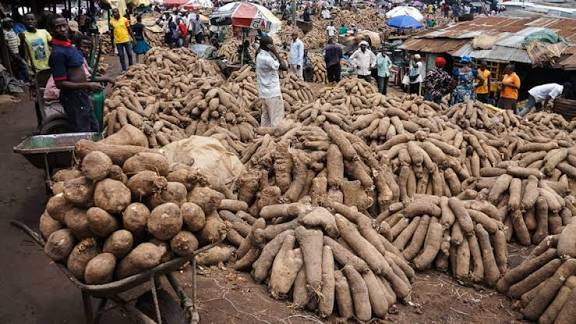
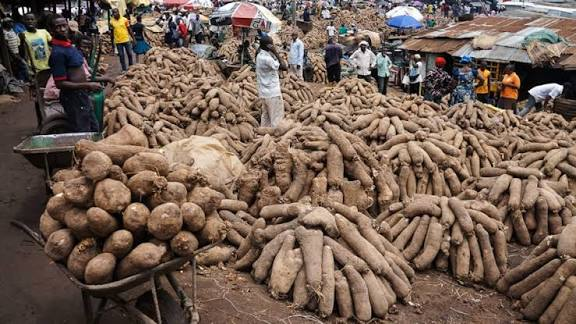
Nigeria may dominate global yam production, but officials say the country is still struggling to meet its own domestic demand.
The Federal Government has revealed that Nigeria accounts for 67 per cent of global yam output, producing about 67.2 million metric tonnes annually. However, national consumption needs are estimated at 120 million metric tonnes, leaving a deficit of more than 50 million metric tonnes.
The Minister of State for Agriculture and Food Security, Aliyu Abdullahi, disclosed this at the National Yam Advocacy Summit held in Abuja. The event was convened by the International Institute of Tropical Agriculture in collaboration with the Federal Ministry of Agriculture and Food Security.
The summit, themed “Catalysing a National Agenda for Yam Value Chain Transformation and Improved Seed Technologies,” focused on modernising production systems, strengthening seed technology, and repositioning the yam subsector for both domestic sufficiency and export growth.
Abdullahi described the production shortfall as both a challenge and an opportunity.
According to him, Nigeria’s leadership in global yam output places the country in a strategic position to expand value addition, reduce post-harvest losses, and capture a greater share of international markets.
He noted that agricultural transformation remains central to President Bola Tinubu’s Renewed Hope Agenda. In 2023, the president declared a State of Emergency on Food Security, prompting the development of targeted, data-driven interventions.
One such intervention is the “Ramping Up Staple Crops Production for Renewed Hope Food Security” programme, introduced in March 2025.
The initiative adopts mechanisation, cluster-based farming models, structured aggregation, post-harvest loss reduction strategies and improved market integration.
Under the framework, staple crops are categorised into tiers based on consumption patterns and strategic importance. Yam has been classified as a Tier-1 crop, reflecting its nationwide demand and economic relevance.
The minister emphasised that transforming the yam value chain would require coordinated efforts among government agencies, research institutions, private investors, state governments, development partners and farmer cooperatives.
He added that the ministry is prioritising farmer training, access to finance, mechanisation support and value-added processing to position Nigeria as a major exporter of yam products.
Also speaking, Abdoulaiye Tahirou, Deputy Director-General of IITA, stressed the need to scale improved seed systems through last-mile seed entrepreneurs. He said strengthening seed technology is critical to improving productivity, safeguarding natural resources and enhancing rural livelihoods.