
By Agrobroadcast Team
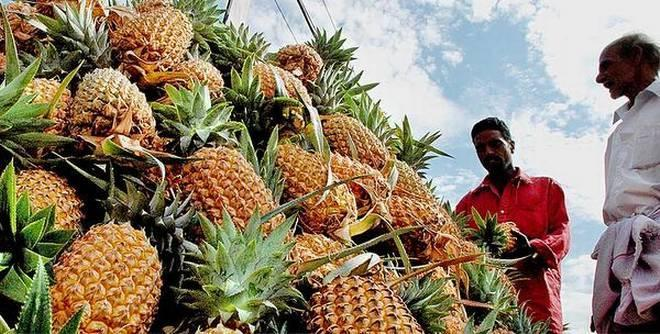
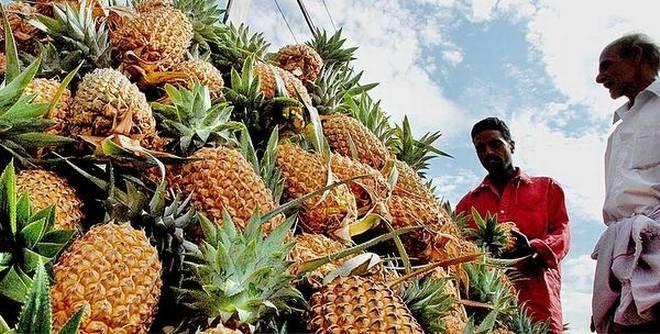
The Government of Japan, in collaboration with the Lift Above Poverty Organisation (LAPO), has commissioned a pineapple juice processing facility in Ekpoma, Edo State, marking a major step toward strengthening agro-processing and rural enterprise development.
Situated in the Ukpenu-Emuhi community of Esan West Local Government Area, the project was delivered under Japan’s Grant Assistance for Grassroots Human Security initiative, reinforcing bilateral development ties between Japan and Nigeria.
Addressing the ceremony virtually on Friday, Japan’s Ambassador to Nigeria, Suzuki Hideo, described the factory as a practical demonstration of both countries’ shared pursuit of human security and broad-based economic growth. He said the establishment of the processing plant signals a transition from reliance on raw produce sales to local value addition, a move expected to curb post-harvest losses and energise the rural economy.
According to the ambassador, the facility is projected to provide a stable off-take market for no fewer than 500 pineapple farmers, while creating ripple effects for about 2,000 farmhands and another 2,000 traders operating across the value chain. He added that Ekpoma’s expanding population driven in part by the presence of Ambrose Alli University offers a ready consumer base for the factory’s products.
Beyond production, the plant is also designed to function as a practical training and research hub, offering industrial exposure to over 1,000 students annually.
Formally inaugurating the project, Edo State Governor, Monday Okpebholo, said the Japan-funded and LAPO-implemented initiative aligns with the state government’s push for agricultural industrialisation and economic diversification.
Represented by the Commissioner for Transport, Saturday Idehen, the governor noted that the factory would create employment opportunities, particularly for young people and women, while strengthening the state’s agro-industrial base under the SHINE Agenda.
He encouraged farmers to scale up cultivation and adopt improved agronomic practices to maximise the opportunities presented by the new processing plant, assuring them of continued government backing.
Earlier, LAPO President, Faith Negbe Osazuwa-Ojo, said the intervention was conceived to tackle persistent pineapple spoilage in the area due to the absence of processing infrastructure. She stated that Japan’s support had converted a longstanding challenge into a viable community enterprise capable of advancing food security, decent livelihoods and local development.
Osazuwa-Ojo, who was represented by LAPO’s Executive Vice President for Health and Social Development, Honestus Ayo Obadiora, emphasised that the factory would operate under a community-ownership framework to guarantee sustainability through local participation and reinvestment of proceeds.
She reaffirmed the organisation’s commitment to skills development, environmental responsibility and inclusive engagement, with a focus on empowering women and youths.