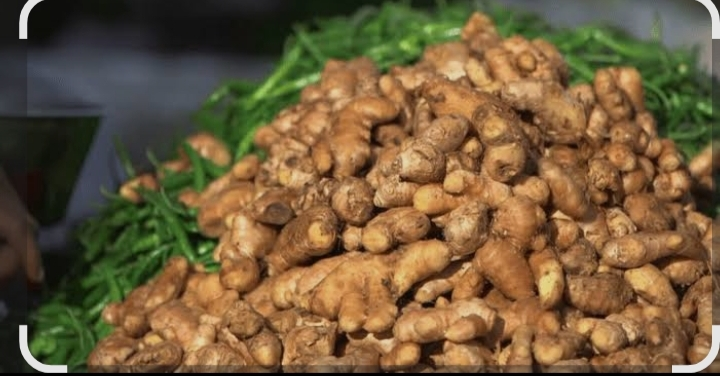
As prices of several staple foods begin to ease across Nigerian markets, ginger has remained a notable exception.
While grains and other food crops have recorded noticeable declines in recent months, the widely used spice continues to command high prices, putting pressure on household budgets and forcing many consumers to limit how often they use it.
Nigeria is one of the world’s leading producers of ginger, ranking second globally with an annual output estimated at between 500,000 and 800,000 metric tonnes, according to the Federal Ministry of Agriculture and Food Security.
Production is largely driven by smallholder farmers, particularly in Kaduna State, which accounts for more than 70 percent of the country’s total ginger output.
Other producing states include Nasarawa, Niger, Gombe and Bauchi, as well as the Federal Capital Territory.
However, the sector is still struggling to recover from a devastating blight outbreak that hit ginger farms in 2023 and 2024. The disease destroyed more than 2,500 hectares of farmland across seven local government areas in southern Kaduna, with losses estimated at about ₦12 billion.
The outbreak sharply reduced production. Emmanuel Gabriel, a ginger farmer from the Kuturmirimi community in Kachia Local Government Area of Kaduna State, said his harvest dropped drastically following the pest attacks.
From an average harvest of about 600 bags of ginger, he now produces barely 20 bags.The steep decline in supply has kept prices high even as other food commodities begin to moderate.
In major markets across northern Nigeria, a bag of dried ginger that once sold for around ₦180,000 now goes for between ₦600,000 and ₦610,000. At the retail level, the increase is equally striking: a mudu measure that sold for about ₦2,700 three years ago now sells for as much as ₦28,000.