
The Federal Government has reaffirmed its commitment to boosting youth participation in agribusiness as part of a national strategy to strengthen food security, stimulate economic growth, and create jobs across the country.
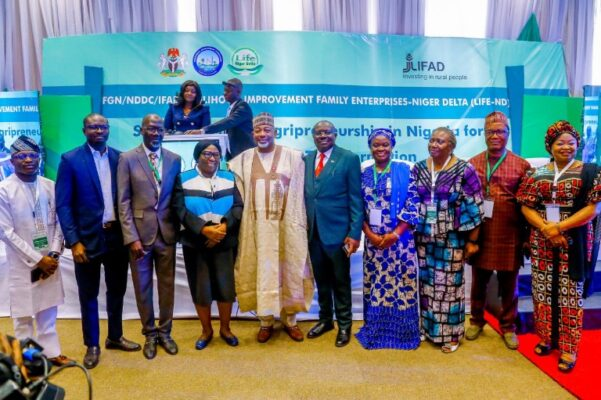
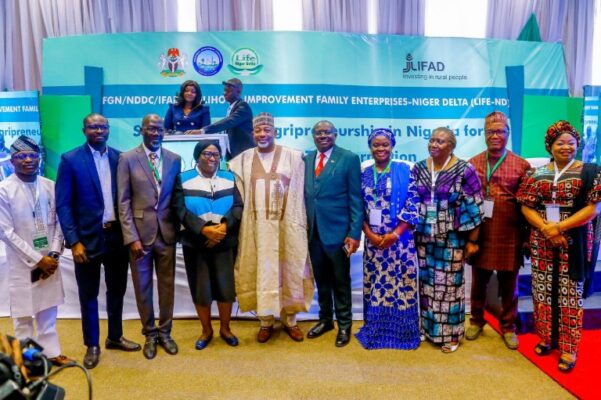
The renewed commitment was revealed on Tuesday in Abuja during a high-level business and policy forum organised to advance youth-led agribusiness under the FGN–NDDC–IFAD Livelihood Improvement Family Enterprises in the Niger Delta (LIFE-ND) Project.
Minister of Agriculture and Food Security, Abubakar Kyari, said the administration is positioning agriculture as a key pillar of the Renewed Hope Agenda. He highlighted that young Nigerians are already at the forefront of innovation from precision farming and digital marketplaces to agro processing and climate smart solutions. Despite this potential, he acknowledged that many young people still face systemic barriers that limit their full participation.
Kyari identified major constraints such as limited access to arable land, inadequate financing, weak market linkages, insufficient processing facilities, and a lack of technical and business training. He said addressing these challenges has become a priority for the government.
To support the growth of youth agripreneurs, the minister announced several interventions. These include measures to ease land acquisition through collaboration with states and communities, expand financing through credit guarantees and youth friendly loan schemes, and strengthen incubation centres to provide mentorship and hands on training. The government also plans to enhance market access by expanding digital trading platforms and promoting partnerships that connect young producers to reliable buyers. All youth focused agricultural initiatives, he added, will integrate climate resilience and sustainable land management practices.
Kyari described the LIFE-ND Programme as a proven model that will be scaled up nationwide in its next phase. IFAD Nigeria’s Country Director, Dede Ekoue, praised LIFE-ND as an internationally recognised initiative that has already supported nearly 24,000 youth led agribusiness ventures across crop production, livestock, aquaculture, and processing. With over 60 percent of Africa’s population under 25, she noted that Nigeria stands to gain significantly from expanding youth agripreneurship. She referenced the Nigeria Youth Mapping Report, which identified more than 6,000 young innovators contributing to the food system despite persistent hurdles.
Ekoue reiterated IFAD’s commitment to supporting youth led agribusiness through LIFE-ND and complementary programmes such as the Special Agro-Industrial Processing Zones, the Value Chain Development Programme, and agribusiness hubs. She called for stronger blended financing, expanded incubation and digital skills initiatives, and deeper partnerships across sectors. She also underscored the importance of involving youth in policy discussions that shape the agricultural landscape.
The forum brought together representatives from the NDDC, AFDB, FAO, World Bank, EU, USAID, and various state governments, reflecting broad support for the initiative. The Federal Government concluded that expanding youth agripreneurship is vital to increasing food production, strengthening value chains, and positioning agriculture as a cornerstone of long-term economic resilience in Nigeria.