
By AgroBroadcast Team
The Federal Government has reaffirmed its commitment to sustaining the recent drop in food prices across Nigeria through intensified interventions along the country’s agricultural value chains.
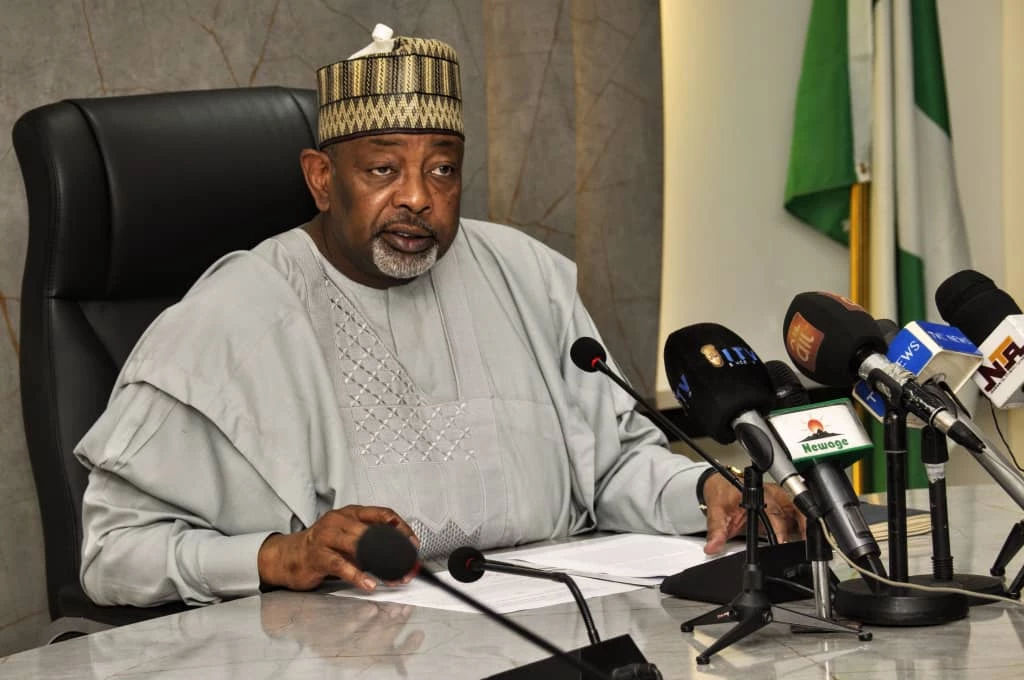
Minister of Agriculture and Food Security, Senator Abubakar Kyari, disclosed this at the 47th Regular Meeting of the National Council on Agriculture and Food Security (NCAFS) held in Kaduna on Thursday. The 2025 edition of the NCAFS, themed “Food Sovereignty and Food Security: An Era of Renewed Hope,” brought together stakeholders from federal and state governments, international development partners, and the private sector.
Government Steps to Stabilise Food Prices
Kyari stated that the government is strengthening operations at the National Strategic Grain Reserve Silos in Zamfara, Katsina, Nasarawa, Adamawa, Niger, Osun, Edo, and Kwara States. These facilities, he said, are being upgraded for better efficiency and greater capacity to respond to market shocks.
According to the minister, integrating these silos into a national food distribution framework will allow for timely interventions during shortages and help stabilise prices of essential food items. “Nigeria is charting a new course towards all-year-round farming and self-sufficiency in wheat production, bringing us closer to meeting our national demand,” Kyari added.
He noted that targeted market interventions had begun to yield results, as food prices of key commodities have started to decline across many markets. “While we are not yet where we want to be, this positive trend confirms that we are moving in the right direction,” he said.
Food Sovereignty and Security: The New Paradigm
The Minister emphasised that the dual concepts of food sovereignty and food security are central to the Tinubu administration’s “Renewed Hope Agenda.”
“Food sovereignty means control over what the nation grows, how it is grown, and how it is consumed, while food security ensures that every household has access to safe, affordable, and nutritious food,” Kyari explained.
“Together, they define the pathway toward an inclusive and resilient agricultural system that leaves no one behind.”
He added that the Federal Government’s agricultural reforms are designed to empower farmers, enhance productivity, and reduce Nigeria’s dependence on food imports — a major strain on the country’s foreign exchange reserves.
Evidence of a Downward Trend in Food Prices
Recent economic data suggests that Nigeria may indeed be seeing early signs of relief.
- Food inflation, which had peaked above 33% in mid-2024, declined to 16.87% in September 2025, according to Trading Economics and National Bureau of Statistics (NBS) data.
- A THISDAY market survey in March 2025 reported that a 60kg bag of garri had dropped to ₦37,500 from earlier highs of ₦55,000, while a basket of fresh tomatoes fell from ₦120,000 to ₦35,000 in Lagos’ Mile 12 market.
- Similar trends were recorded in paddy rice, maize, and sorghum, which analysts at Vesta Energy Nigeria attribute to improved harvests and increased government grain releases.
While experts caution that the declines may not yet be nationwide or sustained, the trend represents a significant shift from the severe food-price escalation witnessed throughout 2023 and early 2024.
Collaborative Interventions and Key Programmes
Senator Kyari highlighted that Nigeria’s progress is being reinforced through strategic partnerships with the African Development Bank (AfDB) and state governments under the National Agricultural Growth Scheme–Agro-Pocket (NAGS-AP) programme.
The scheme, regarded as Nigeria’s flagship input delivery initiative, provides subsidised fertilisers, improved seeds, and extension support directly to farmers.
“Through this programme, wheat production has expanded from 15 participating states in the 2023/2024 dry season to broader coverage in the 2024/2025 farming cycle,” Kyari said.
He described this as a deliberate effort to promote input efficiency, production expansion, and self-sufficiency in key staples such as rice, maize, and wheat.
Nigeria’s Broader Food Security Landscape
Despite encouraging trends, analysts warn that Nigeria still faces deep structural challenges in its food system.
According to reports by the Food and Agriculture Organization (FAO) and World Food Programme (WFP), over 26.5 million Nigerians could face food insecurity in 2025 due to climate stress, insecurity in key food-producing regions, and post-harvest losses.
Insecurity in the Northwest and Northcentral regions continues to limit access to farmlands, while transportation and storage bottlenecks inflate prices between rural production zones and urban markets.
The NBS 2025 food consumption survey also shows that food accounts for over 55% of household expenditure, underscoring the urgent need for policies that sustain affordability.
Policy Focus: Building a Resilient Food System
Experts say the government’s renewed push toward value-chain development — from input supply to processing, storage, and distribution — could be a turning point if sustained.
Agricultural economist Dr. Grace Olanrewaju of the University of Ibadan told AgroBroadcast News that stabilising food prices will depend on how efficiently the government manages its grain reserves, transport logistics, and market coordination.
“Expanding production is one thing, but ensuring that food actually reaches consumers at affordable prices is another. The silos and value-chain approach are crucial if properly managed,” she said.
She also noted that digital monitoring of grain reserves, transparent market interventions, and state-level collaboration could determine the long-term success of these efforts.
The Road Ahead
The Federal Government’s assurance to sustain the downward trend in food prices represents a key test of the Renewed Hope Agenda’s promise of economic relief.
If ongoing programmes such as NAGS-AP, strategic grain reserve reforms, and market interventions remain consistent, Nigeria could make measurable progress toward true food sovereignty — where citizens are not only fed, but their livelihoods are secured through agriculture-driven growth.
“The goal is not just cheaper food,” Kyari concluded, “but a sustainable agricultural system that empowers farmers, ensures nutrition for families, and strengthens our national economy.”
Byline:
This report was compiled by the AgroBroadcast Research & Data Desk, drawing on Agency reports, NBS data, and reports from AfDB, FAO, and local commodity markets.