
By Agrobroadcast Team
The Federal Government of Nigeria has announced plans to strengthen collaboration with the Dairy Sub-sector Group of the Manufacturers Association of Nigeria (MAN) to boost investment in the country’s dairy industry and reduce reliance on imports.
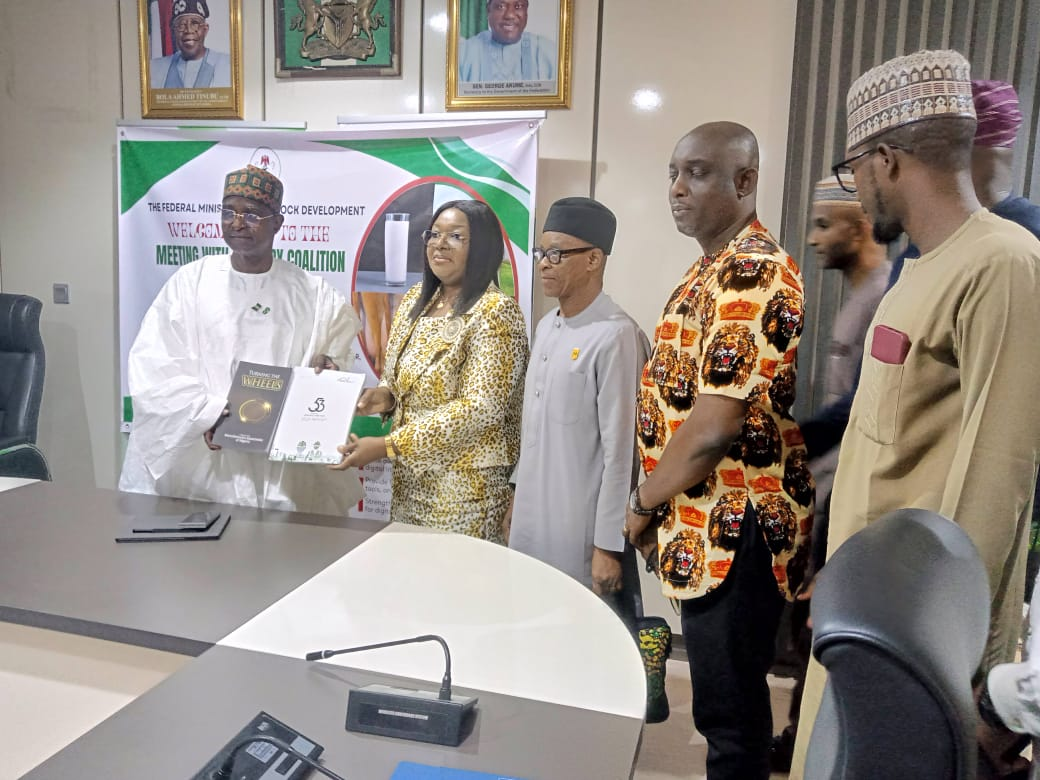
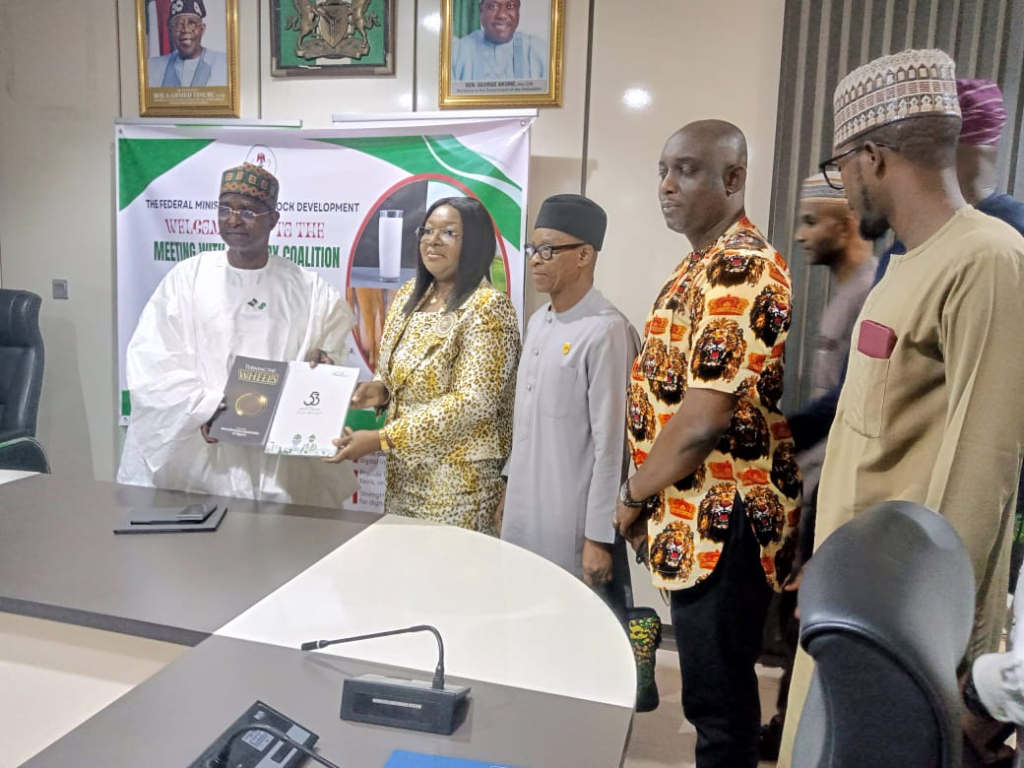
Speaking during a courtesy visit by the MAN delegation in Abuja, the Minister of Livestock Development, Idi Maiha, said stronger partnerships between government and industry players were essential to revitalising the dairy sector and unlocking the country’s vast livestock potential.
Maiha noted that Nigeria represents the largest market in Africa for vaccines and dairy products, yet domestic production of milk and other dairy commodities remains far below national demand.
He disclosed that the country spends about $1.5 billion annually on the importation of milk and dairy products, in addition to another $1.5 billion spent on vaccine imports, despite having the largest market for such products on the continent.
According to the minister, the situation presents significant opportunities for public-private partnerships aimed at revitalising the sector.
He identified several areas for investment, including the rehabilitation of 38 moribund livestock facilities across the country, establishment of milk collection centres, and development of breed multiplication centres for goats, pigs and cattle.
Maiha added that collaboration with MAN would provide one of the fastest routes to repositioning the dairy industry, as the ministry continues to seek investors through strategic partnerships.
He further revealed that the government plans to rehabilitate 417 grazing reserves nationwide, which will be made available to investors willing to partner with the government in expanding dairy production.
“These initiatives are part of efforts to revive the dairy sector and increase local production,” he said, adding that other investment opportunities exist in feed and fodder production, milk processing and seed multiplication.
The minister also urged MAN to prioritise breed improvement, milk collection systems and aggregation centres, noting that Nigeria has yet to fully harness its milk production capacity.
He explained that poor rural infrastructure continues to hamper supply, particularly during the rainy season when many farmers are forced to dispose of milk because producers, mostly women, cannot cross rivers to deliver their products.
Maiha therefore stressed the need for expanded milk collection centres and stronger capacity-building programmes for dairy farmers.
“We are ready to work together to revive the dairy sector because that is where the economic potential lies,” he said.
Earlier, Chairperson of the Dairy Sub-sector Group of MAN and Executive Director, Corporate Affairs at FrieslandCampina WAMCO Nigeria, Ore Famurewa, said Nigeria currently consumes between 1.6 million and 1.7 million metric tonnes of milk annually.
However, she noted that local production isestimated at only 600,000 to 700,000 metric tonnes, leaving a substantial supply deficit.
Famurewa said the gap presents both a challenge and an opportunity for investors, adding that Nigeria possesses key assets for dairy development, including an estimated 20 million cattle population, vast grazing land, a growing consumer market and a vibrant food and beverage manufacturing sector.
She, however, highlighted several constraints affecting the industry, such as low milk productivity per animal, inadequate dairy infrastructure, limited access to finance for farmers, security and grazing challenges, and weak value chain integration.
According to her, addressing these issues would require coordinated action involving government, private investors, development partners and local farming communities.
Famurewa explained that the visit was aimed at reaffirming the group’s commitment to Nigeria’s organised dairy industry and strengthening collaboration with the ministry in implementing the National Dairy Policy.
She emphasised that although demand for dairy products in Nigeria remains strong, local milk production continues to fall far short of national consumption levels, creating a significant supply gap in the sector.