
By Agrobroadcast Team
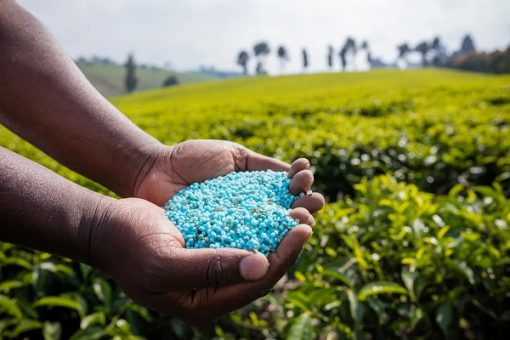
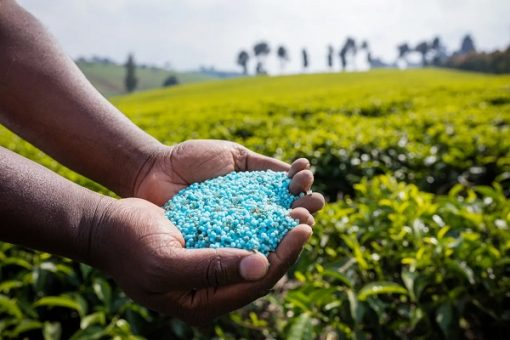
Nigeria’s push to boost crop yields is colliding with a stubborn reality: fertiliser use has climbed to its highest level on record, yet many farmers say the cost of keeping their fields productive is becoming unsustainable.
Data from the Nigeria Fertiliser Dashboard show that consumption rose to 1.86 million metric tonnes, even as retail prices hover between ₦34,683 and ₦40,041 per 50kg bag, depending on location and supply conditions. For smallholder farmers, who account for the bulk of domestic food production, these price levels are increasingly out of reach.
The growing strain on producers has drawn legislative attention. In December, the Senate urged the Federal Government to take urgent steps to reduce fertiliser prices in order to shield farmers from mounting input costs. The resolution followed a motion sponsored by Danjuma Goje, senator representing Gombe Central.
Goje acknowledged government efforts to lower food prices through import waivers and special approvals for bulk food imports, but warned that the policy had placed local producers at a disadvantage.
“While the prices of farm produce have been going down, that of farm inputs, especially fertilisers, pesticides and insecticides, have remained extremely high,” he said, noting that the imbalance has contributed to post-harvest losses as farmers struggle to recover production costs.
He cautioned that sustained pressure on producers could weaken domestic food output, deepen rural economic stagnation and heighten Nigeria’s exposure to global price swings and foreign exchange volatility.
Aliyu Wamakko, senator representing Sokoto North, described the cost of fertiliser and other inputs as “alarming,” while Mohammed Dandutse of Katsina South argued that Nigeria’s continued reliance on imports undermines its agricultural potential.
According to him, with over 60 per cent of Nigerians dependent on agriculture, the country must prioritise policies that strengthen local production rather than external supply chains.
Following debate, the Senate called for broad-based subsidies on fertilisers and other inputs, the establishment of benchmark minimum prices and guaranteed off-take arrangements, and a review of import waivers to ensure local produce competes fairly with imported food.
Global market trends suggest the pressure may persist. Rabobank, through its market intelligence arm TRaboResearch, has warned that rising fertiliser prices could push the sector into another contraction phase.
In its latest outlook, the bank reported that between April and September 2025, nitrogen and potash prices rose by about 15 per cent, while phosphate prices increased by nearly 19 per cent. Lead analyst Bruno Fonseca said affordability challenges could tighten the market further in 2026.
Amid these headwinds, the Federal Ministry of Agriculture and Food Security has entered into a Memorandum of Understanding with the International Institute of Tropical Agriculture to implement a nationwide soil health and fertiliser efficiency programme.
The initiative is designed to improve soil quality, provide data-driven fertiliser recommendations and enhance productivity while reducing waste.
Minister of Agriculture and Food Security, Abubakar Kyari, said the programme would equip farmers with precise guidance on fertiliser application and crop selection based on soil data, helping to curb unnecessary spending and boost yields.
The intervention aligns with the Presidential Soil Health Scheme and the Renewed Hope for Food Security and Sovereignty Agenda.
Despite the record consumption figures, fertiliser application rates remain low relative to global standards. Across 92.5 million hectares of cultivated land, average application stood at just 20.1 kilogrammes per hectare in 2024 well below the 100 to 200 kilogrammes per hectare recommended by the Food and Agriculture Organisation for optimal yields.Urea accounted for 59.1 per cent of total consumption during the year.
Cost breakdowns for 2025 indicate that diammonium phosphate was delivered at about $928.87 per metric tonne, while muriate of potash stood at $491.81 per metric tonne. Beyond the base product price, expenses related to logistics, financing, bagging and warehousing significantly inflate final retail costs.
Analysts say the rise in total consumption reflects more farmers gaining access to fertiliser, rather than existing users applying recommended quantities highlighting a structural gap between availability and optimal usage in Nigeria’s agricultural sector.