
By Agrobroadcast Team
For years, farmers have been cast mainly as casualties of climate change at the mercy of droughts, floods and unpredictable weather. But across Nigeria’s rural communities, a different story is unfolding. Farmers are no longer just victims; they are emerging as frontline actors in the fight to restore degraded landscapes, secure food supplies and confront climate change. At the heart of this shift is agroforestry.
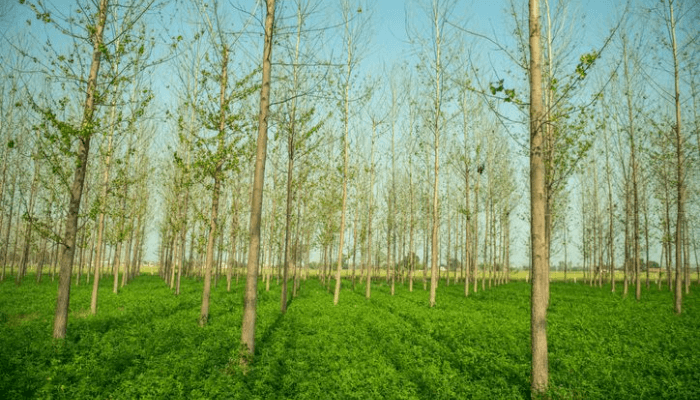
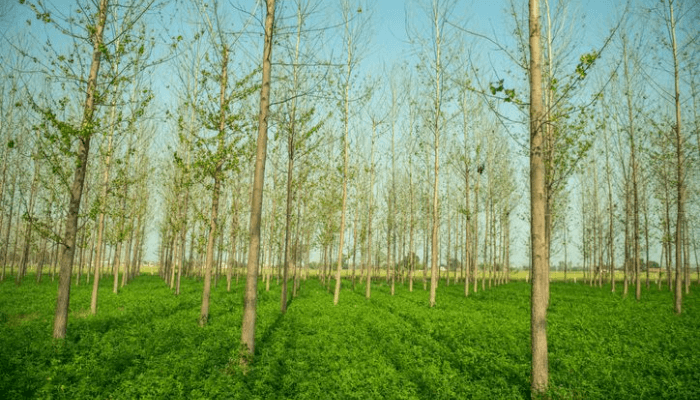
Agroforestry involves deliberately growing trees alongside crops and livestock. While the practice has deep roots in traditional Nigerian agriculture, it is now gaining renewed attention as pressure mounts from deforestation, soil degradation and climate stress.
The urgency is clear: Nigeria continues to lose vast areas of forest each year, driven largely by logging, fuelwood use, urban growth and expanding farmland. At the same time, smallholder farmers face declining yields as soils weaken and weather patterns become more erratic.
Treating forests and farms as rivals for land has proven ineffective. Environmental projects that push tree planting at the expense of food production often fail because they overlook a basic reality communities must eat to survive.
Agroforestry challenges this false choice by showing that farming and forest restoration can happen together.
When properly designed, tree-based farming systems restore soil fertility, reduce erosion and help farms retain moisture during dry spells. Trees moderate heat, protect crops from strong winds and reduce the impact of flooding. Below and above ground, they store carbon, making agroforestry a powerful climate mitigation tool.
Beyond the environmental gains, the economic benefits are significant. Trees provide farmers with additional products such as fruits, nuts, fodder, timber and medicinal resources. This diversification strengthens household incomes and reduces vulnerability to market shocks or crop failure. In today’s fragile rural economy, such resilience can mean the difference between survival and collapse.
Evidence of agroforestry’s impact is already visible across the country. In the South-West, cocoa farmers are reintroducing shade trees to boost yields and revive degraded lands. In the Middle Belt, farmers are planting nitrogen-fixing trees alongside staple crops to rebuild exhausted soils.
Northern communities are using shelterbelts and parkland systems to slow desertification while maintaining food production.
Despite these successes, agroforestry remains largely sidelined in major climate and reforestation programmes.
Many initiatives still focus on the number of trees planted rather than long-term survival or community benefits. Seedlings are distributed without plans for maintenance, land ownership issues are ignored, and farmers are treated as passive recipients rather than partners. The outcome is often poor survival rates and limited lasting impact.
This highlights a critical lesson: environmental projects that ignore food security and livelihoods are unlikely to succeed. Communities cannot be expected to protect trees if doing so threatens their ability to feed their families. Where survival is at stake, conservation will always come second.
Agroforestry offers a way out of this dilemma by aligning environmental goals with economic incentives. When trees contribute directly to income and food security, farmers are motivated to nurture and protect them. Sustainability becomes practical, not imposed.
For policymakers, investors and companies pursuing environmental, social and governance (ESG) goals, the implications are profound. Climate action cannot be separated from social impact. Projects that cut emissions but worsen hunger are not sustainable.
Reforestation efforts that exclude local voices are unlikely to endure.
Scaling agroforestry will require supportive policies that recognise tree-based farming, secure land rights for smallholders, provide patient finance and deliver tailored technical support. Above all, communities must be involved from the outset not as an afterthought, but as co-creators.
As Nigeria confronts climate change and environmental decline, quick fixes will not be enough. Tree planting alone will not save forests. Sustainability that sidelines people will fail. Agroforestry offers a more realistic path one that places farmers at the centre of climate solutions. If done right, Nigeria’s rural communities will not merely adapt to a changing climate. They will help lead the transition to a more resilient, productive and sustainable future.