
By Agrobroadcast Team
Nigeria’s poultry industry is facing fresh pressure as rising costs and supply shortages threaten egg production, raising concerns about food prices and protein availability for millions of households.
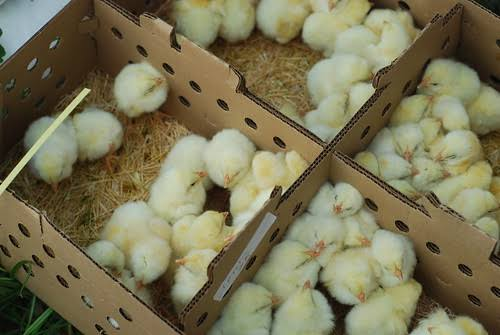
Nigeria may experience egg shortages in the coming months as the price of day-old chicks has surged by 67 percent within three months.
Poultry farmers across the country are struggling to restock and increase production due to long waiting periods for pullets young hens raised for egg production. The scarcity has pushed the price of day-old chicks to about N3,000, up from N1,800 in January 2026.
“There is a scarcity of pullets,” said Dayo Gawati, managing director and chief executive officer of Fdot Farms Limited.
Gawati explained that hatcheries are currently unable to meet rising demand, as many farmers who previously shut down operations due to economic challenges are now returning to the business following a slight drop in feed costs. According to him, farmers can no longer walk into hatcheries and get pullets immediately, as orders now take at least three months due to increased demand.
Industry findings show that several factors are responsible for the shortage of pullets in the country. Taiwo Adeoye, former president of the Animal Science Association of Nigeria, said the cost of producing day-old chicks has increased significantly. He noted that many hatcheries and breeders failed to restock their parent and grandparent stock the breeding birds used to produce fertilised eggs after suffering heavy losses when poultry farmers shut down operations due to high feed costs.
Between 2023 and 2024, Nigeria’s poultry industry recorded major losses as the prices of maize and soybeans, key ingredients in poultry feed, rose sharply. The situation forced many farmers to close their farms, reducing demand for day-old chicks and causing hatcheries to scale down production.
Although the livestock sub-sector, which poultry dominates, recorded a slight growth of 0.08 percent in 2025 after contracting by 2.14 percent in 2024, industry operators say recovery is still slow.
Sunday Ezeobiora, president of the Poultry Association of Nigeria, said the industry is gradually recovering after years of rising production costs, especially feed, which accounts for about 70 percent of poultry production expenses. However, he noted that the current shortage of day-old chicks may persist until another egg-production cycle is completed.
Naira devaluation has also worsened the situation. Gawati explained that many hatcheries rely on importing fertilised eggs for hatching, and the weaker naira has made imports more expensive, forcing hatchery operators to reduce production.
Eggs getting out of reach
The continuous increase in egg prices is making eggs and chicken less affordable for many Nigerians, raising concerns about protein consumption, especially among low-income households.
Eggs are considered one of the cheapest sources of animal protein, and rising prices are threatening nutrition levels, including the government’s egg-per-day nutrition campaign for children.
Nigeria’s per capita daily protein intake is estimated at 45.4 grams, which is below the minimum requirement of 53.8 grams recommended by the Food and Agriculture Organisation. Experts warn that if egg prices continue to rise, the country’s protein deficit could widen, increasing the risk of malnutrition among vulnerable populations.