
By Agrobroadcast Team
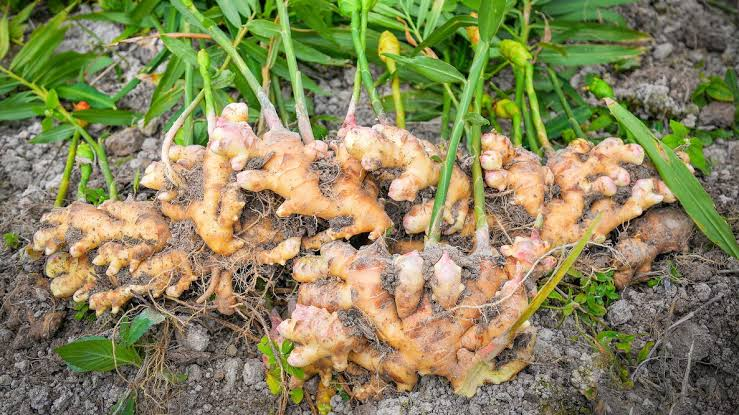
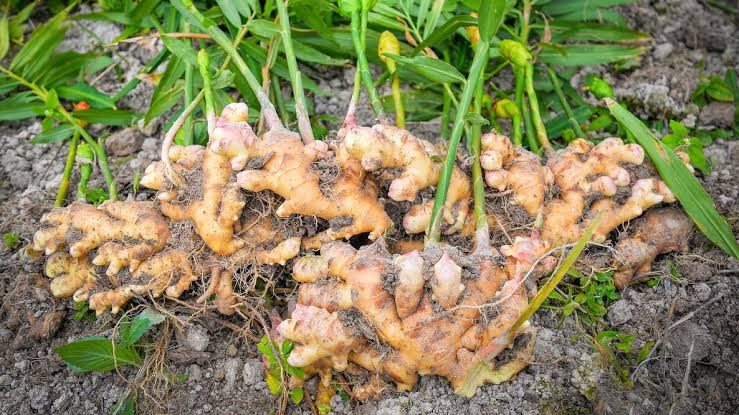
Despite recent relief in the prices of some staple foods across Nigerian markets, ginger remains conspicuously expensive, defying the downward trend seen in grains and other agricultural commodities.
The persistent rise in the cost of the spice is placing additional pressure on household spending and forcing many consumers and food vendors to cut back on its use.
Nigeria is among the world’s largest producers of ginger, ranking second globally with annual production estimated at between 500,000 and 800,000 metric tonnes, according to the Federal Ministry of Agriculture and Food Security.
The crop is largely cultivated by smallholder farmers, with Kaduna State contributing more than 70 percent of the country’s total output. Other producing states include Nasarawa, Niger, Gombe, Bauchi and the Federal Capital Territory.
However, the ginger sector has been grappling with the lingering effects of a severe blight outbreak that devastated farms between 2023 and 2024.
The disease destroyed more than 2,500 hectares of ginger fields across seven local government areas in southern Kaduna, leaving farmers with estimated losses of about N12 billion.
The outbreak significantly reduced harvest volumes. Emmanuel Gabriel, a ginger farmer from Kuturmirimi community in Kachia Local Government Area of Kaduna State, said the pest invasion wiped out most of his crop.
According to him, production on his farm dropped drastically from about 600 bags of ginger in previous seasons to barely 20 bags.
The sharp decline in supply has played a major role in sustaining high prices, even as other food commodities begin to stabilise.
In several northern markets, a bag of dried ginger that previously sold for about N180,000 now goes for between N600,000 and N610,000.
Retail prices have surged just as dramatically. A mudu measure that cost roughly N2,700 three years ago is now selling for as much as N28,000.
Traders attribute the persistent price surge to a combination of reduced local supply and strong international demand for Nigerian ginger.
Isah Garba, a ginger farmer and trader at Yankaba spice market in Kano, explained that the pest infestation severely disrupted production, and many farmers are still struggling to rebuild their farms.
“Farmers faced serious pest attacks in the last three to four years and they are yet to fully recover,” he said. “Production dropped sharply because yields were badly affected.”
At the same time, export demand for Nigerian ginger has remained strong. The spice is highly valued in global markets for its strong flavour and high oleoresin content, attracting buyers from countries including India, Saudi Arabia, the United Arab Emirates, the Netherlands and China, according to the Nigeria Export Academy.
Hamisu Inuwa, a long-time ginger merchant, said demand from Europe and Asia has intensified in recent years, with the Netherlands emerging as one of the largest importers of Nigerian ginger.
For seasoned traders, the current price levels are unprecedented. Bello Guri, who has spent more than three decades in the spice trade, said ginger has never commanded such high prices in his years in the market.
He noted that rising global demand and increasing awareness of ginger’s medicinal properties have helped transform the once-common kitchen spice into a highly valuable agricultural commodity.
The soaring cost is already reshaping consumption patterns among households and small-scale food businesses.
Fatima Abubakar, a consumer, said buying even small quantities of ginger now requires significantly more money.
“If you ask for N500 ginger, you will be surprised at how little you get,” she said. “I used to add it to kunu, but I had to stop because it is too expensive.”
Food vendors are also adjusting their recipes to cope with the rising cost. Ijeoma Ifeanyi, who runs a small food business, said N1,000 now buys only a few slices of dried ginger.
“Ginger has no alternative,” she said. “It is either you use it or you forget about it.”