
By Agrobroadcast Team
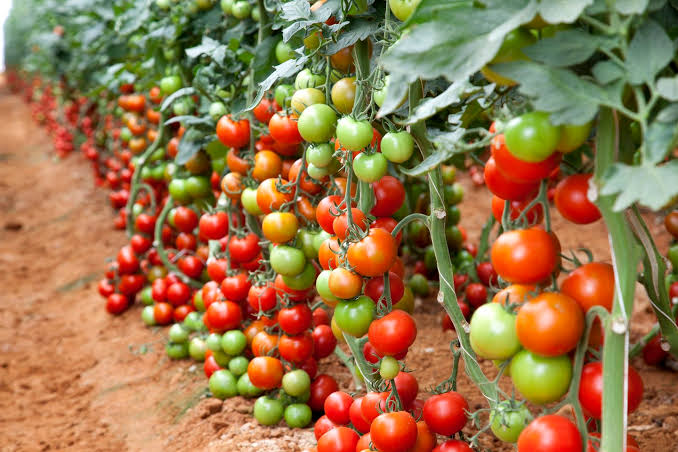
Tomato, a cornerstone of daily meals in Nigerian households, is at the centre of fresh concerns as farmers grapple with mounting post-harvest losses and rising production costs. From stews and soups to sauces and salads, the crop remains indispensable yet growers say systemic gaps in storage, processing and input supply continue to erode their profits.
Northern states, particularly Kaduna State, Kano State and Plateau State, account for a significant share of Nigeria’s tomato output. Beyond its culinary value, the crop plays a critical role in rural livelihoods and national food security.
Despite its importance, stakeholders say the tomato value chain remains vulnerable, with recurring post-harvest losses estimated to consume a large portion of harvested produce annually. Farmers attribute the situation to poor preservation systems, weak transport infrastructure and limited access to affordable finance for modern equipment.
In Kaduna, growers under the umbrella of the National Tomato Growers, Processors and Marketers Association of Nigeria (NATPAN) are urging government intervention to curb waste and stimulate value addition.
The association is advocating investment in processing plants and improved logistics to reduce spoilage and stabilise prices.
To mitigate losses, NATPAN has begun collaborations with processing facilities aimed at promoting mechanised farming. Among the solutions being encouraged are the adoption of plastic crates for transportation to minimise bruising and the use of solar dryers to extend shelf life.
The International Fertilizer Development Center (IFDC) is also supporting farmers with training on post-harvest handling practices and promoting the use of durable plastic crates to replace traditional baskets that often damage fresh produce.
Farmers are further calling on the Federal Government to make fertilisers more affordable and revive dormant tomato processing plants across the region.
Speaking with the News Agency of Nigeria, a Kaduna-based farmer, Alhaji Hussaini Uba, described tomatoes as highly perishable, noting that prices fluctuate sharply due to weather variability and seasonal supply.
He recalled that during the administration of the late Balarabe Musa, a state-backed tomato processing company absorbed surplus harvests for canning and export, significantly reducing farmers’ losses.
“Whenever there was a bumper harvest, excess tomatoes were taken to the factory. Farmers had a guaranteed outlet. Today, those facilities are no longer functional,” he said.
According to Uba, a basket of tomatoes currently sells between ₦12,000 and ₦20,000, depending on variety and quality.
He explained that most farmers rely on slicing and sun-drying tomatoes for preservation, although many opt to sell immediately after harvest to avoid spoilage.
Another farmer, Salisu Abdullahi, lamented the absence of functional processing plants in the region, stressing that most growers depend solely on traditional sun-drying methods. He added that high fertiliser and pesticide prices further strain production costs.
Abdullahi pointed out that some cold storage facilities in Plateau help preserve perishable crops temporarily and appealed for similar infrastructure in Kaduna to ease pressure on farmers.
In Kano, tomato growers are facing parallel challenges. Farmers there have appealed to the state government for urgent support in the form of subsidised fertilisers and modern storage systems.
The situation has been worsened by outbreaks of Tuta absoluta, a destructive tomato pest, alongside escalating input costs and inadequate storage capacity. Many producers report losing up to 40 per cent of their harvest to spoilage and pest damage.
Malam Nura Bello, a farmer from Kura, said the combined impact of pest infestation and high fertiliser prices has made sustained production increasingly difficult.
“We are battling pest attacks, expensive inputs and poor storage. Without intervention, it will be hard to maintain supply,” he said.
Similarly, Sani Ali from Bunkure noted that the absence of storage facilities often forces farmers to sell at below-market prices immediately after harvest. He urged the government to partner with private investors to establish storage hubs in key production clusters.
Another grower, Bala Nasiru, called for subsidised pesticides and fertilisers, as well as expanded extension services to train farmers on pest management and yield improvement.
Across Kaduna and Kano, farmers agree that reviving processing plants, expanding cold storage infrastructure and ensuring affordable access to farm inputs would not only reduce post-harvest losses but also strengthen incomes and enhance Nigeria’s food security outlook.