
By Agrobroadcast Team
In a renewed push to stabilise food production and rural incomes, the Zamfara State Government has commenced a large-scale distribution of agricultural inputs tailored specifically for the dry-season farming window.
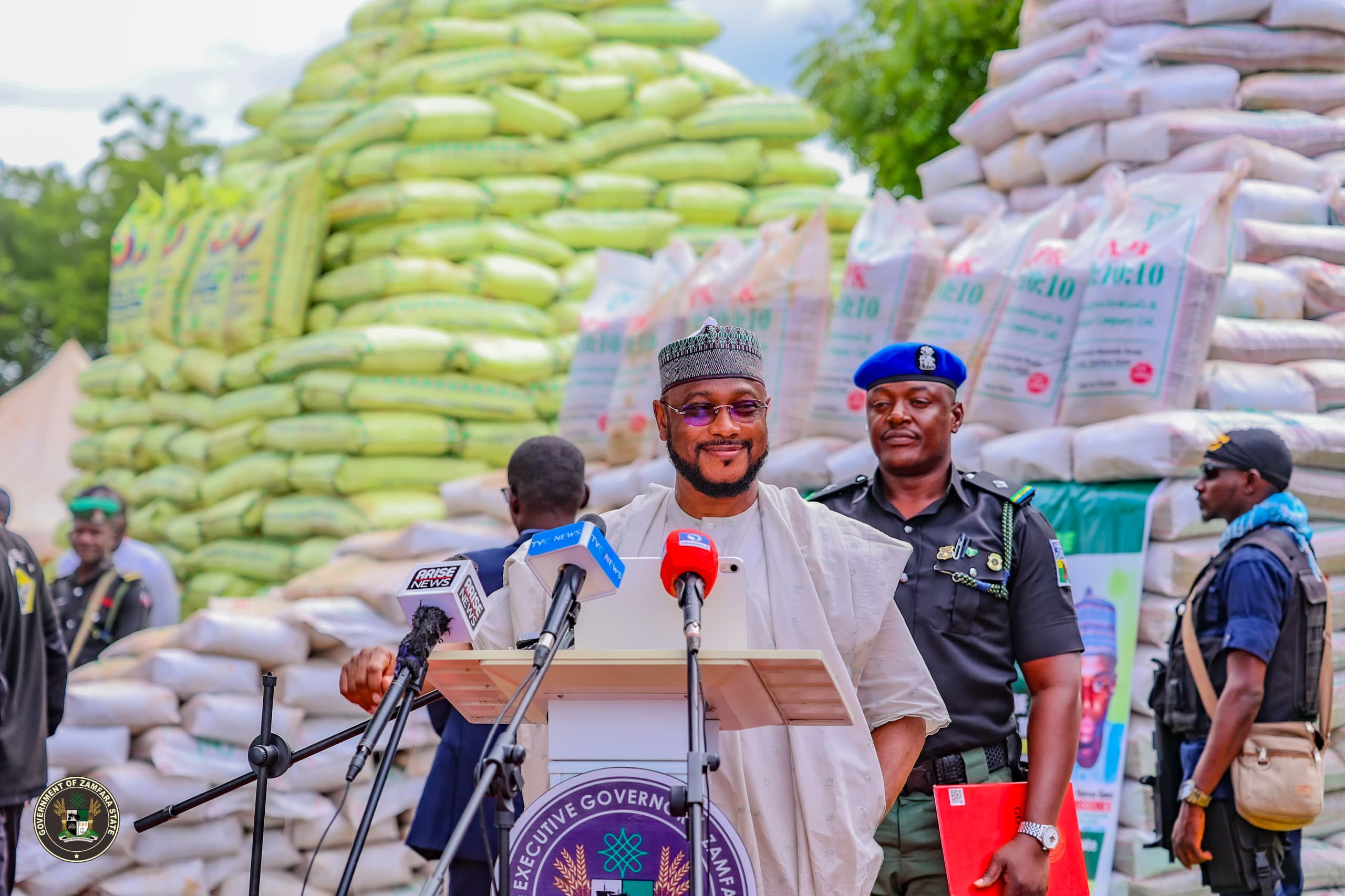
Governor Dauda Lawal inaugurated the intervention on Thursday at the Fadama III facility of the Ministry of Agriculture in Gusau, describing the programme as a strategic investment designed to reposition agriculture as a sustainable economic pillar in the state.
The support package, structured to address both input deficiency and productivity gaps, comprises 3,920 bags of NPK fertilizer, 1,956 bags of Urea fertilizer, 3,920 litres of herbicide, 1,956 litres of insecticide, and 3,920 sachets of seed-dressing chemicals.
The intervention also includes farm equipment intended to ease cultivation and improve operational efficiency.
According to a statement issued by the governor’s spokesperson, Sulaiman Bala Idris, the distribution is expected to enhance crop performance, mitigate post-harvest losses, and promote climate-conscious and sustainable agronomic practices among smallholder farmers.
Governor Lawal noted that the initiative aligns with a broader agricultural transformation blueprint aimed at boosting yields, strengthening value chains, and improving livelihoods. He reiterated that agriculture remains central to Zamfara’s economic resilience and food sufficiency goals.
“Farming is the backbone of our economy, and it is our responsibility to equip our farmers with the tools they need to succeed,” the governor said, emphasizing that dry-season cultivation offers an opportunity to expand production cycles beyond the traditional rainy season.
He also highlighted the impact of the NG-CARES programme in laying the groundwork for agricultural progress in the state.
OAccording to him, previous rounds of input support under the initiative had reached tens of thousands of smallholder farmers, combining improved seeds and agrochemicals with technical advisory services and peer-learning frameworks to drive behavioural change and seed adoption.
Lawal urged beneficiaries to apply the inputs judiciously to maximize output and sustain long-term growth. He expressed optimism that the intervention would not only consolidate Zamfara’s food security drive but also contribute to national efforts to reduce reliance on food imports.
Addressing security concerns that have affected farming communities, the governor pledged continued strengthening of local security architecture alongside agricultural interventions. He stressed that enhanced security and productivity must go hand in hand to unlock the full potential of the sector.
The governor further commended development partners and the Federal Government for supporting the NG-CARES initiative, describing the collaboration as critical to improving farm yields, increasing household incomes, and reinforcing food security through integrated support mechanisms.
The programme is projected to benefit thousands of farmers across the state, expanding dry-season production capacity and reinforcing Zamfara’s long-term agricultural development agenda.