
By Agrobroadcast Team
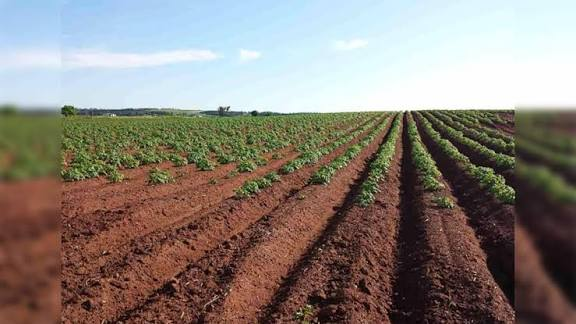
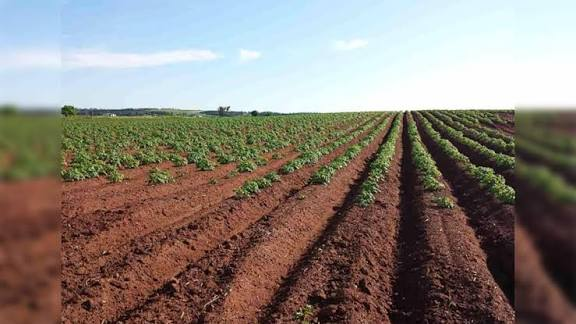
A Lagos-based agribusiness company, Moor Farms Limited, has unveiled a structured three-year farmland investment programme that requires a minimum capital commitment of N6 million per acre, positioning the initiative as both an income-generating vehicle and a strategic intervention in Nigeria’s food supply chain.
The scheme, which focuses on cassava, cashew and corn cultivation, was introduced at a media briefing in Lagos by Olumuyiwa Adewunmi, Chief Executive Officer of Moor Agro-Finance and Investment Bank.
He explained that each subscriber will be assigned one acre within a managed estate, with returns projected and disbursed annually over a three-year production cycle.
Under the earnings forecast shared at the briefing, investors could realise approximately N645,000 in the first year, N843,000 in the second year, and up to N2.7 million in the third year. The company noted that final returns will be influenced by agronomic performance and prevailing commodity prices.
Adewunmi described the initiative as an integrated estate model that consolidates cultivation, processing and produce offtake within a single operational framework. According to him, the structure is designed to eliminate post-harvest inefficiencies while guaranteeing market access for harvested crops.
A key feature of the programme is the deployment of precision agriculture technology. Investors, he said, will be able to track soil conditions, irrigation levels, nutrient application and estimated crop valuation via a digital dashboard linked to their investment profile.
The platform provides real-time updates, enabling remote monitoring irrespective of the investor’s location.
Estate layouts are pre-structured to optimise diversification and risk distribution. Each 20-hectare fenced and surveillance-monitored cluster will comprise 45 per cent cashew, 35 per cent cassava and 20 per cent corn.
However, “platinum” category subscribers may adjust crop ratios within defined operational parameters. The company disclosed plans to scale the estates to several thousand hectares nationwide, with identified expansion corridors including parts of Kogi State.
In terms of risk mitigation, the firm has instituted layered safeguards covering security, insurance and regulatory compliance. Adewunmi confirmed that crop insurance arrangements have been concluded with First Bank Insurance to underwrite cultivation-related losses. He also disclosed that the company has applied for a microfinance licence to strengthen its financial intermediation capacity and streamline investor services.
Beyond projected returns, the promoters framed the scheme as a response to structural gaps in Nigeria’s agricultural landscape. Citing an estimated 77 million hectares of arable land and a food import bill running into billions of dollars annually, Adewunmi argued that coordinated private-sector capital is essential to unlocking dormant agricultural assets.
He explained that the estate model aggregates what would otherwise be fragmented smallholder production into commercially viable blocs capable of attracting offtakers and industrial processors. The approach, he added, is built around a zero-waste value chain philosophy anchored on guaranteed produce uptake.
Field operations under the investment scheme are scheduled to commence in March, with the company responsible for land preparation, seedlings, fertilisers and other agronomic inputs.
Adewunmi further characterised the investment as long-term, noting that subscribers retain lifetime participation within the estate framework, with expectations of progressive land value appreciation alongside crop yield growth over time.