
By Agrobroadcast Team
A climate-focused agricultural intervention is beginning to reshape rice and cassava production across parts of Niger State, with smallholder farmers reporting higher yields, expanded cultivation areas and new income streams from agro-waste processing.
The gains are linked to the Adaptation for Smallholder Agriculture Programme (ASAP), a grant component under the International Fund for Agricultural Development-supported Value Chain Development Programme (VCDP).
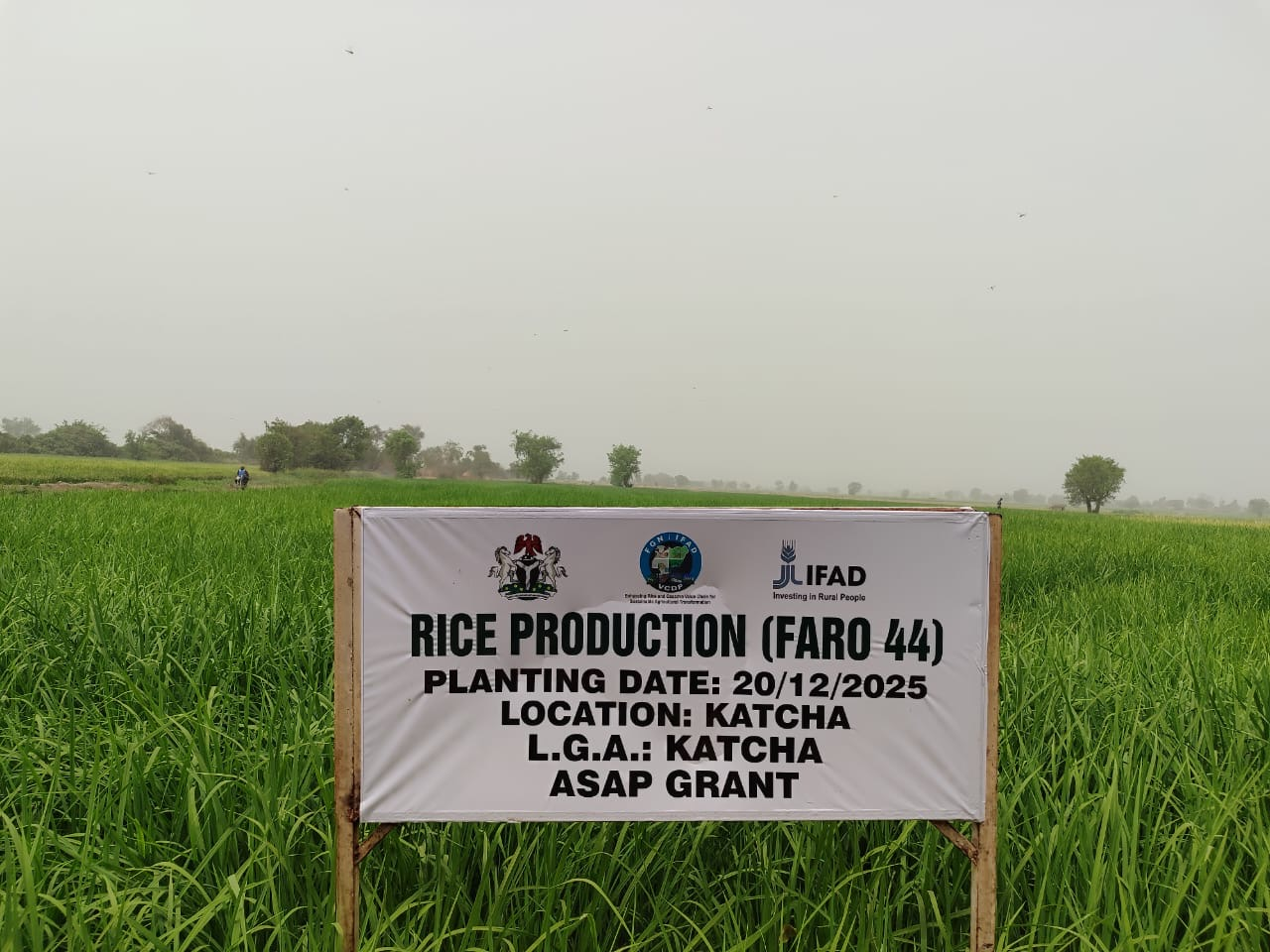
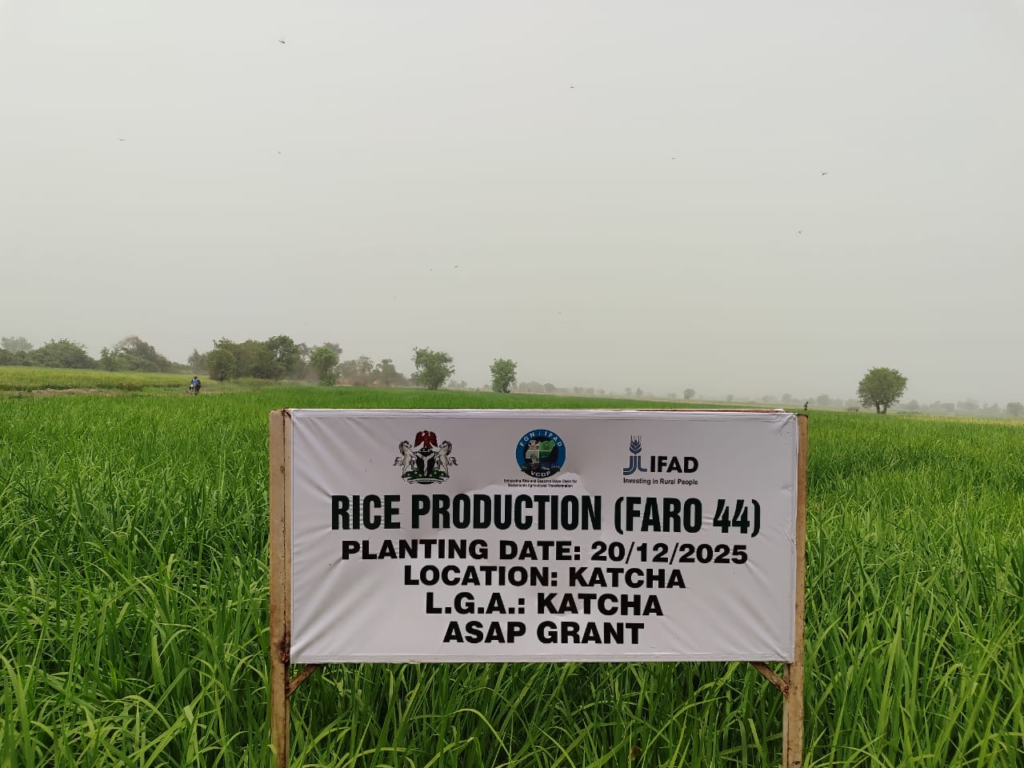
During a monitoring tour to Katcha and Bida Local Government Areas, programme officials observed significant improvements at intervention sites, including larger rice fields, improved cassava processing operations and emerging waste-to-wealth enterprises driven by women and youth groups.
The visit covered the Bangi Farmers Cooperative and the Emiworo community in Katcha, as well as the Dabarako Cassava Processing Centre in Bida. Officials assessed the performance of improved rice varieties and climate-smart technologies introduced under the ASAP framework.
ASAP, a global climate finance initiative of IFAD embedded within Nigeria’s VCDP structure, is designed to channel targeted funding to vulnerable smallholder farmers while strengthening resilience across food systems.
In Niger State, the initiative operates in six local government areas Bida, Borgu, Edati, Katcha, Mokwa and Wushishi supporting actors across the rice and cassava value chains, including producers, processors, marketers, women-led cooperatives and youth clusters.
The State Programme Coordinator of VCDP, Hajiya Hadizat Isah, disclosed that implementation commenced in March 2025 in Niger and Kogi States, two of the nine states participating in the national programme.
According to her, Niger accounts for 18,710 beneficiaries out of the 24,000 farmers supported across the two states. In Katcha LGA alone, 1,410 farmers are cultivating nearly 500 hectares under the scheme.
Isah explained that the intervention prioritises climate resilience, sustainable production and improved waste management through innovative conversion technologies.
Farmers received climate-tolerant rice seeds and high-yield cassava stems, including Vitamin A–fortified varieties. Processors were also equipped with machinery to transform rice husks and cassava peels into commercially viable products.
At Emiworo community, members of the Emiworo Women Cooperative demonstrated briquettes produced from rice husks an initiative aimed at reducing post-harvest waste, limiting deforestation and creating alternative sources of income.
Similarly, operators at the Dabarako Cassava Processing Centre showcased equipment used to convert cassava peels into livestock feed, thereby minimising environmental pollution while strengthening the livestock value chain.
One of the beneficiaries, Haliman Ibrahim from Emiworo, said training on rice husk conversion had significantly improved household earnings, noting that proceeds from briquette sales now contribute to family income.
Ahmed Mohammed, a rice farmer in Katcha, said the improved seed varieties had resulted in abundant harvests.
“Our markets are filled with paddy. We can now pay school fees without hardship,” he said.
Nathaniel Gana, an Extension Agent in Katcha, noted that beyond input distribution, the programme emphasised structured monitoring and farmer capacity building. Beneficiaries were trained in Good Agronomic Practices and climate-smart agriculture to ensure sustainability.
Infrastructure support formed another pillar of the intervention. The project facilitated construction of bunds to improve water retention, erosion control through strategic planting of grasses and shrubs, drilling of tube wells and deployment of 1,200 solar-powered irrigation pumps to enable dry-season farming.
In addition, 36 cassava peel conversion machines, 50 rice husk briquette machines and 110 power tillers for bund construction were distributed. The programme also supplied laptops and mobile phones to enhance access to climate information and digital extension services.
With production rising and value addition improving at community level, stakeholders say the intervention is positioning smallholder farmers in Niger to better withstand climate shocks while increasing productivity and income.