
By Agrobroadcast Team
The Federal Government has renewed its drive to combat malnutrition by scaling up the cultivation and consumption of biofortified crops nationwide, signalling a shift toward improving the nutritional quality of food available to Nigerians.
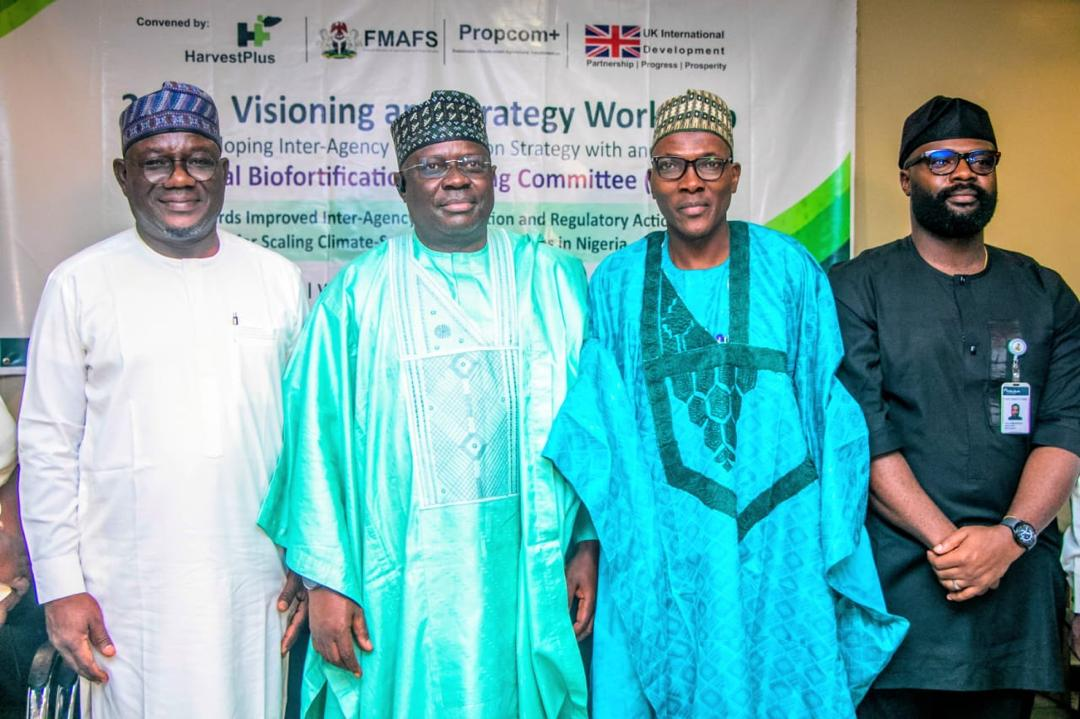
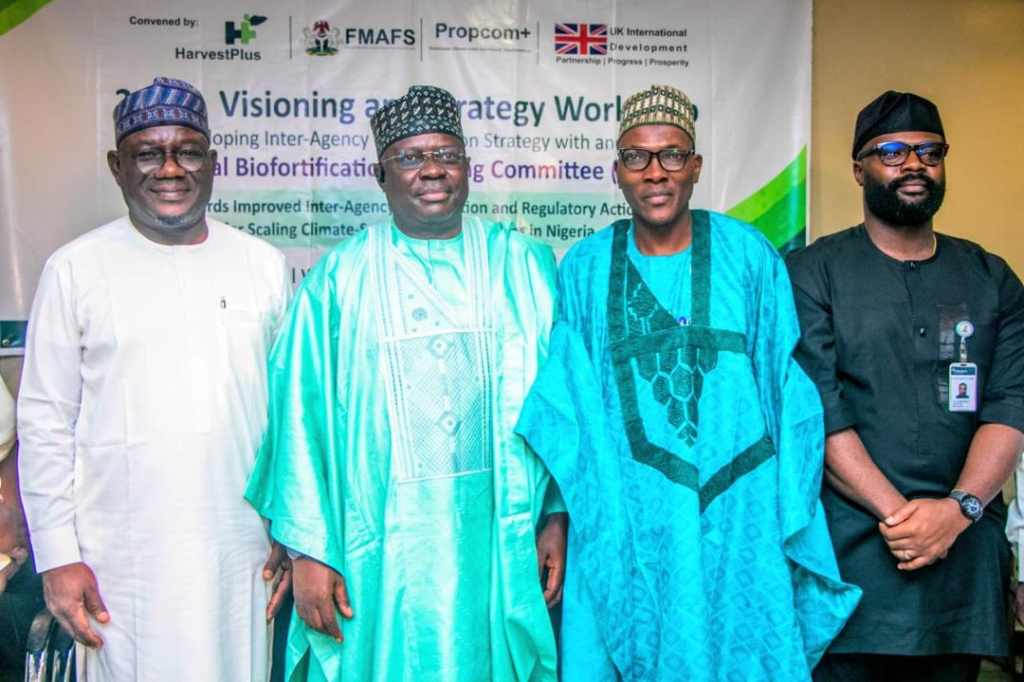
Permanent Secretary of the Federal Ministry of Agriculture and Food Security, Dr. Marcus Ogunbiyi, made this known at a National Biofortification Workshop held in Kano on Saturday. He said national efforts must go beyond boosting harvest volumes to ensuring that food consumed across the country delivers essential nutrients.
According to Ogunbiyi, access to sufficient food supplies alone does not address the country’s nutrition challenges. He stressed that meals must also be safe, affordable and rich in vital micronutrients to improve public health outcomes.
He described malnutrition and micronutrient deficiencies as persistent threats to both national productivity and healthcare systems, noting that vulnerable groups particularly women and children remain disproportionately affected.
Biofortification, he explained, offers a practical and sustainable pathway to enrich staple crops with essential vitamins and minerals.
The workshop, he added, was convened to reassess the mandate and operational strategy of the National Biofortification Steering Committee and harmonise its activities with existing agricultural and nutrition policies.
Nigeria, he disclosed, currently leads globally in the variety of biofortified crops developed and deployed.
These include iron-enhanced pearl millet, zinc-fortified rice, Vitamin A cassava, Vitamin A maize and Vitamin A sweet potato products introduced through collaborations with research bodies and development partners.
He further noted that biofortification initiatives have been embedded in national policy frameworks, while private sector operators are playing a growing role in seed production, processing and market expansion.
Stakeholders at the workshop called for increased funding for research, improved extension services and broader public sensitisation to drive faster uptake of nutrient-enriched crops across the country.