
By Agrobroadcast Team
Nigeria may soon begin exporting animal feed to key Middle Eastern countries, as discussions advance between prospective buyers and Nigerian suppliers, the Minister of Livestock Development has revealed.
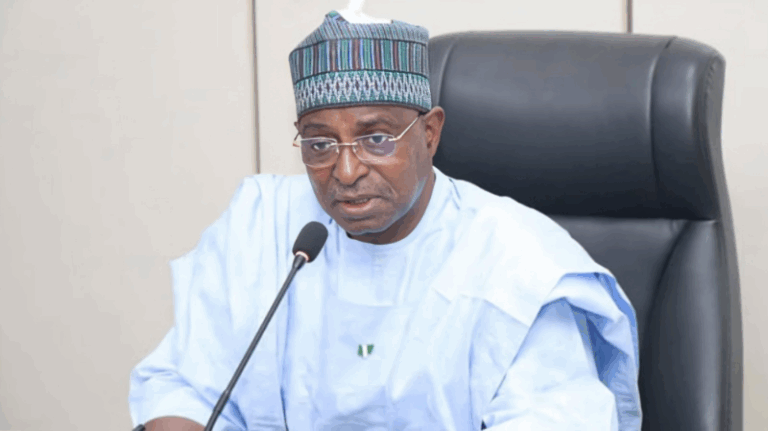
Speaking at a stakeholders’ forum in Ilorin, Kwara State, the Minister of Livestock Development, Idi Maiha, said the United Arab Emirates, Saudi Arabia and Qatar are considering Nigeria as a source of fodder, including hay, straw and other grasses, to support their livestock industries.
According to him, negotiations are ongoing with potential offtakers, with pricing discussions reportedly benchmarked in dollars a development he described as a significant commercial opportunity for Nigerian producers.
He recalled his own experience in the trade, noting that even basic pasture can generate foreign exchange when properly positioned in international markets. “Grass may seem ordinary, but it holds real economic value.
There are multiple species suitable for commercial cultivation, and this is a segment we have not fully explored,” he said, stressing the need for greater awareness among local investors.
Maiha also drew attention to structural weaknesses within Nigeria’s livestock value chain, particularly in dairy production. He noted that the country expends about $1.5 billion annually on dairy imports due to inadequate local milk output.
While Nigerian cattle produce an average of 23 litres of milk per day, he said yields in other countries range between 25 and 40 litres daily.
Data from the National Bureau of Statistics indicate that Nigeria’s livestock population includes more than 58 million cattle, 124 million goats, 70 million sheep, 13.33 million pigs and over 410,000 donkeys figures the minister argued should position the country as a net producer rather than an importer.
He maintained that Nigeria possesses the natural resources and human capital required to achieve self-sufficiency in livestock production, describing the sector as one of the few agricultural segments capable of generating daily returns.
The minister further disclosed that the federal government is implementing measures to strengthen the industry, including improved animal disease control, enhanced pasture development and expanded support for fish production.
He encouraged entrepreneurs to view livestock as a strategic investment area, emphasising that food production remains a non-negotiable necessity in any economy.