
By Agrobroadcast Team
Nigeria’s push to stabilise its food system and confront climate vulnerability is increasingly being driven by young innovators deploying technology and clean energy solutions to repair broken agricultural value chains.
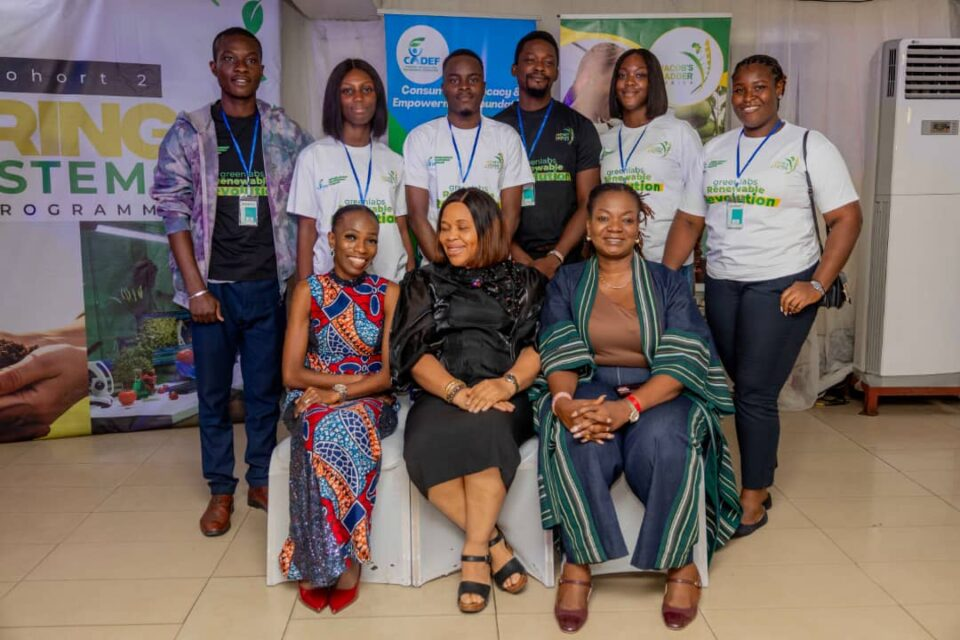
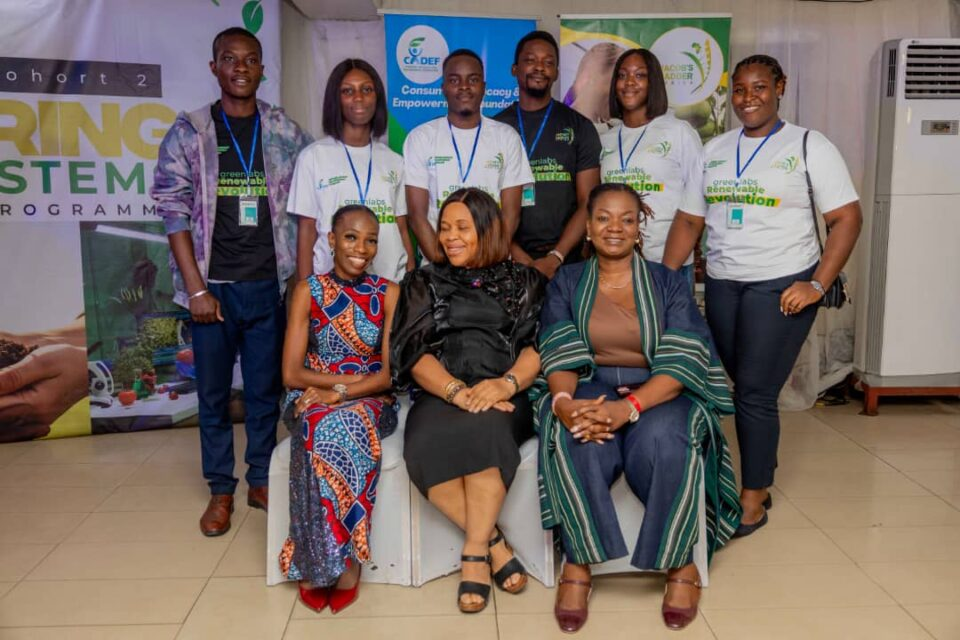
That shift was evident on Friday as the Greenlabs Incubation Programme staged its Cohort 2 “Powering Food Systems” Demo Day, spotlighting market-ready innovations designed to curb post-harvest losses, strengthen supply chains and integrate renewable energy into farming operations.
The initiative, powered by the Consumer Advocacy and Empowerment Foundation (CADEF) in collaboration with Jacobs Ladder Africa (JLA), is positioning youth-led enterprises as critical actors in the transformation of Nigeria’s agri-food ecosystem.
Launched on January 22, 2026, the Greenlabs “Powering Food Systems” Innovation Challenge drew entries from across the country. After a rigorous, mentor-led innovation sprint and multi-layered evaluation process, 16 shortlisted teams pitched their solutions at the Demo Day event.
Among them, Geocycle, Leovia Farms and Ecobag Mart emerged as standout performers. In recognition of their scalability and commercial viability, the trio secured pre-seed funding to advance product development, complete business formalisation processes, validate market demand and accelerate early-stage market penetration.
All finalists will now enter a structured nine-month incubation programme aimed at transitioning prototypes into investment-ready green ventures. The programme offers technical advisory support, enterprise development training and access to networks and growth capital.
Representing the Permanent Secretary of the Federal Ministry of Agriculture and Food Systems, Emmanuel Audu Fatai underscored the urgency of embedding innovation within Africa’s food architecture.
He argued that the continent’s persistent paradox vast agricultural resources coexisting with food deficits and climate shocks demands integrated solutions that connect energy, finance, policy, technology and entrepreneurship.
He noted that innovation has become indispensable to securing Africa’s food future, stressing that young founders are redefining how food systems can function in a climate-constrained era.
At the subnational level, Lagos State reaffirmed its commitment to climate-smart agriculture and youth inclusion through programmes such as the Lagos Agrithon, Agri-Innovation Summit, Food for Lagos Programme, Agri-Premiership Programme and the Lagos Agricultural Scholars Programme, all designed to stimulate production and agribusiness development.
Environmental regulators also indicated growing institutional backing for circular-economy models, including waste-to-energy applications, reflecting broader alignment around sustainable, low-carbon growth pathways.
Executive Director of CADEF, Prof. Chiso Ndukwe-Okafor, described the Demo Day as more than a pitching platform, calling it a conversion point where early-stage concepts evolve into structured enterprises. She explained that the incubation framework integrates governance standards, financial management discipline and entrepreneurial capacity building to ensure long-term viability.
Similarly, Chief Innovation Officer at Jacobs Ladder Africa, Karen Chelang’at, said the challenge deliberately tasked participants with solving tangible bottlenecks within food systems particularly in segments such as poultry and aquaculture using renewable-energy-driven interventions capable of improving productivity and reducing waste.
Organisers emphasised that public policy alone cannot resolve Nigeria’s food and climate pressures, arguing that coordinated public-private collaboration and youth-led innovation will be pivotal to building resilient supply chains.
With funding secured and incubation underway, Greenlabs Cohort 2 marks a transition from policy rhetoric to implementation, signalling a growing role for youth-powered enterprise in advancing Nigeria’s food security and green economy agenda.