
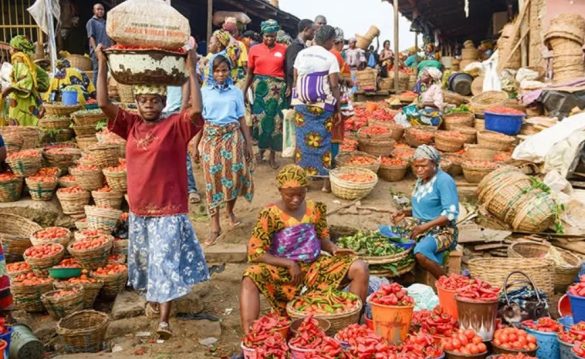
By Agrobroadcast Team
As Nigeria intensifies efforts to expand agricultural output, industry players are warning that the country’s biggest setbacks are occurring not on the farm, but after harvest.
Stakeholders across multiple value chains argue that systemic weaknesses in storage, logistics and processing infrastructure are eroding farmer incomes and undermining food security.
They stress that without urgent reforms in post-harvest management, gains recorded in primary production will continue to dissipate before produce reaches consumers.
In separate interviews with Daily Independent, operators in crop and livestock sectors described post-harvest losses as one of the most critical structural deficiencies in Nigeria’s food system.
Even in seasons of improved yields, farmers reportedly lose substantial value to spoilage, fragmented aggregation systems and limited market access.
They advocate deliberate investment in storage facilities, processing plants and integrated supply-chain networks, with a stronger role for private-sector actors in value-chain development.
According to them, coordinated aggregation centres, commodity exchanges and modern warehousing would significantly reduce waste and moderate price volatility.
While climate-related production risks persist, stakeholders insist that securing Nigeria’s food future requires equal attention to what happens beyond the farm gate.
Austine Gbenga Adeniba, Chief Operating Officer of Eliakim Integrated Services Limited, noted that inadequate cold storage capacity and deteriorating rural road networks result in heavy losses, particularly for perishable produce such as fruits and vegetables.
He explained that a considerable share of harvested crops spoils before reaching end markets, weakening both food availability and farmer profitability.
Rising input and transportation costs further compound the challenge.
Similarly, Anibe Achimugu, President of the National Cotton Association of Nigeria (NACOTAN), highlighted escalating costs of fertiliser, agrochemicals, diesel and energy, alongside insufficient storage and aggregation systems.
He said farmers often record improved output but still struggle to capture value due to high post-harvest inefficiencies.
Prince Oyewumi Oyetunde, a stakeholder in the livestock subsector, underscored the need for expanded investment in silos, cold storage infrastructure and efficient distribution networks, particularly for perishable commodities.
Strengthening these systems, he said, would reduce waste, enhance food security and boost rural incomes.Echoing similar concerns, Ado Sule, Director of Administration at NACOTAN, called for more robust post-harvest frameworks to curb losses and stabilise commodity markets.
He noted that the absence of structured storage and aggregation compels many farmers to offload produce immediately after harvest, often at depressed prices.Within the poultry and livestock industries, stakeholders see untapped potential in cold chain logistics and processing.
Sunday Ezeobiora, President of the Poultry Association of Nigeria (PAN), pointed to opportunities in broiler processing, stating that expanded cold chain infrastructure could reduce losses and ensure steady meat supply to markets.
He added that investment in processing would strengthen market balance and limit waste.Across the board, operators observed that limited processing capacity leaves producers reliant on raw commodity sales, restricting value addition and income growth.
Oyewole Okewole, Senior Associate Consultant at FutuX Agri-consult Limited, said Nigeria’s agricultural agenda in 2026 must pivot decisively toward value addition, storage development, processing expansion and supply-chain optimisation.
According to him, addressing these deficits is critical to restoring competitiveness lost across several value chains in 2025.
He further recommended targeted support for enterprises involved in storage, processing and export-oriented agribusiness, noting their strategic role in minimising waste and improving farm-gate earnings.
However, stakeholders identified financing constraints as a persistent obstacle.
Achimugu cited tight monetary conditions and elevated benchmark interest rates as factors limiting affordable credit for investments in storage, mechanisation, processing and input supply.
They warned that without accessible financing, both public and private sector efforts to modernise post-harvest infrastructure will remain constrained.
Industry players maintain that weak storage systems, inefficient logistics and limited processing capacity continue to drain value from Nigeria’s agricultural sector, exacerbate rural poverty and blunt the impact of rising production.
For meaningful transformation, they argue, policy focus must extend beyond boosting yields to building resilient post-harvest systems that preserve value, stabilise markets and ensure food reaches consumers.
Until those structural gaps are closed, much of Nigeria’s agricultural progress will continue to be lost between harvest and the marketplace.