
By Agrobroadcast Team
Nigeria and the United States have taken fresh steps to strengthen economic ties, identifying agriculture, the digital economy and infrastructure as key pillars for expanded trade and investment cooperation under the United States–Nigeria Commercial and Investment Partnership (CIP).
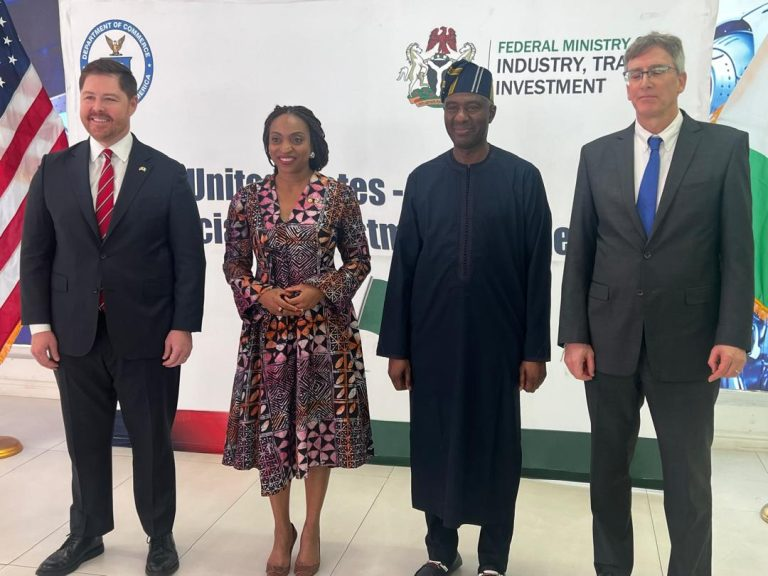
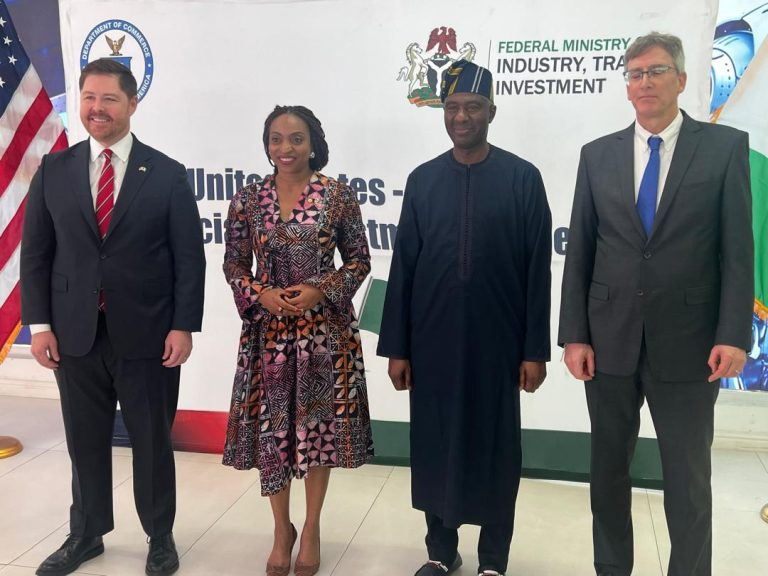
The renewed commitment was underscored at a ministerial meeting of the partnership held in Lagos, where senior officials from both governments met with private sector leaders to review progress and outline next steps for deepening bilateral commercial engagement.
Officials at the meeting said the focus on the three priority sectors reflects a shared strategy to unlock new investment flows and scale two-way trade, guided largely by recommendations developed through joint public-private sector working groups.Deputy Assistant Secretary for the U.S.
Commercial Service at the U.S. Department of Commerce, Bradley McKinney, said the partnership is designed to move beyond dialogue to practical implementation, driven by areas of clear commercial advantage for both countries.
According to him, agriculture, digital technology and infrastructure emerged as priority areas following extensive consultations with private sector stakeholders in both countries, who identified them as sectors with strong growth potential and complementary strengths.
“This process allowed both governments to listen closely to their private sectors and focus on areas where collaboration can deliver real results,” McKinney said, adding that the U.S. and Nigerian governments are committed to executing the agreed recommendations.
He noted that the working groups had produced actionable proposals to address trade and investment bottlenecks in the selected sectors, stressing that implementation would remain a joint responsibility of both governments.
Nigeria’s Minister of Industry, Trade and Investment, Dr. Jumoke Oduwole, described the engagement as well-timed, noting that it aligns with the economic reform priorities of President Bola Ahmed Tinubu’s administration.
She said Nigeria has continued to work closely with U.S. counterparts and private sector partners to ensure that the Commercial and Investment Partnership delivers concrete outcomes, particularly in areas that support economic diversification and private sector growth.
Oduwole explained that the emphasis on infrastructure, agriculture and the digital economy reflects sectors where cooperation can drive investment, boost competitiveness and strengthen Nigeria’s position as a regional trade hub.
“These discussions are about supporting private businesses, attracting investment into critical sectors and enabling Nigerian companies to trade more effectively across Africa,” she said.
The minister added that Nigerian firms are keen on improved market access and sustained collaboration in goods and services trade, technology development and infrastructure delivery, describing the meeting as solution-oriented and entrepreneurial in outlook.
Linking the partnership to the administration’s Renewed Hope Agenda, Oduwole said diversifying non-oil exports remains a core objective, noting that the priority sectors fit naturally with Nigeria’s economic structure and reform agenda.
She said the alignment between both economies makes cooperation in services, technology, agriculture and infrastructure commercially compelling, adding that U.S.
companies have shown strong interest in investing in Nigeria’s infrastructure and productive sectors.Also speaking at the meeting, Associate Administrator of the Foreign Agricultural Service at the U.S. Department of Agriculture, Jason Hafemeister, highlighted the strong potential for expanded agricultural cooperation between both countries.He said U.S. and Nigerian agricultural systems are complementary, creating opportunities for collaboration across value chains, while stressing the importance of stable, transparent and predictable trade policies.
Hafemeister added that ongoing economic reforms in Nigeria are helping to build confidence among farmers and agribusinesses in both countries.
The Commercial and Investment Partnership, signed in July 2024, was created to deepen economic collaboration between Nigeria and the United States, with a focus on agriculture, the digital economy and infrastructure.
Oduwole said the strength of the partnership lies in its ability to translate policy discussions into measurable commercial outcomes, noting that strategic initiatives such as the CIP will be critical as Nigeria pursues its ambition of building a $1 trillion economy anchored on competitive exports, industrial value addition and robust capital markets.