
By Agrobroadcast Team
More than 12,000 women smallholder farmers and young people across the Federal Capital Territory (FCT) have been equipped with skills in agroecology commonly referred to as organic farming through a three year intervention implemented under the Strategic Partnership for Agroecology and Climate Justice (SPAC–West Africa).
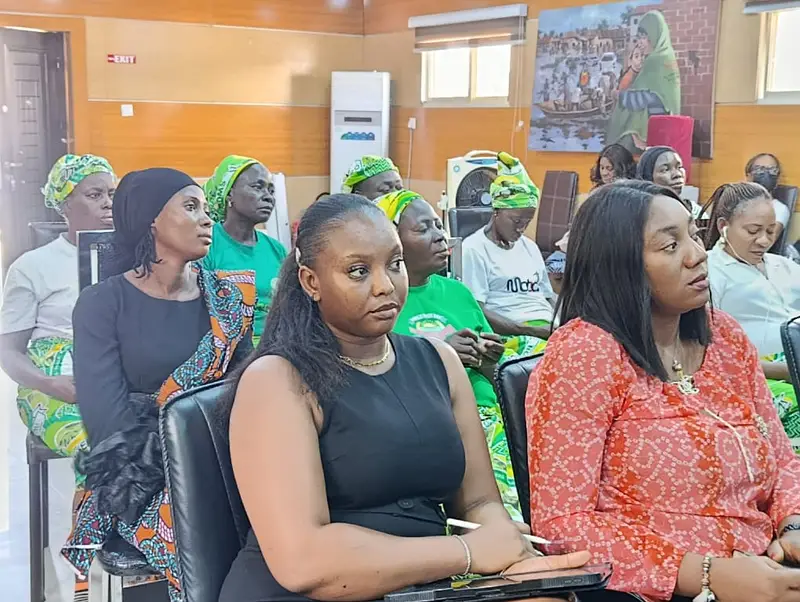
The initiative, supported by ActionAid, was highlighted in Abuja on Thursday during a stakeholders’ campaign and advocacy forum focused on land ownership and market access for smallholder women farmers and youths in the FCT.
Speaking at the event, the Project Lead for SPAC–West Africa in Nigeria, Mrs Hajara Ramson, explained that beneficiaries were drawn from all six Area Councils of the FCT and trained through a structured capacity-building model anchored on cooperatives.
According to her, the approach relied on Training of Trainers (ToT), enabling a ripple effect within farming communities.
She said the first phase of the programme in 2023 trained 80 women leaders, each of whom subsequently trained about 50 farmers, reaching approximately 4,000 beneficiaries.
The same model was replicated in 2024 and 2025, bringing the total number of trained women farmers and youths to over 12,000.
Ramson noted that the intervention had strengthened sustainable farming practices, reduced dependence on harmful agricultural inputs and enhanced community resilience.
However, she stressed that despite improved production capacity, many smallholder women farmers and young farmers were still unable to fully translate increased output into economic gains.
According to her, insecure land tenure and limited access to structured and profitable markets remain major obstacles.
She said women farmers are often discouraged from making long-term investments in agroecological practices due to the absence of clear land rights, while poor market linkages and unfair pricing mechanisms further weaken their earning potential.
She explained that without integration into formal supply chains and reliable market systems, higher productivity does not automatically lead to improved income, better livelihoods or economic empowerment, thereby limiting the contribution of smallholder farmers to resilient local food systems.
Although the SPAC project cycle has ended, Ramson called for its scale-up, urging government authorities to partner with trained smallholder farmers to deepen the impact nationwide.
She said expanding organic food production is critical to protecting public health and ensuring food security.
Ramson also disclosed that the SPAC–West Africa project in Nigeria was implemented with support from ActionAid’s International Transformative Impact Fund (TIF) in collaboration with the Small-Scale Women Farmers Organisation in Nigeria (SWOFON).
She said SWOFON represents more than 500,000 rural women farmers across the 36 states of the federation, contributing over 75 per cent of Nigeria’s food supply.
According to her, the organisation promotes sustainable agriculture and rural economic development through capacity building, advocacy and engagement with relevant authorities on behalf of women farmers.
She added that SPAC was designed to tackle the harmful effects of unhealthy farming practices, including the excessive use of synthetic fertilisers and hazardous chemicals, which contribute to land degradation, unsafe food production and increased public health risks.
The advocacy forum, she said, was aimed at driving dialogue around secure land ownership and improved market access for women farmers as a foundation for a food-secure nation.
Also speaking at the event, the District Head of Abaji, Alhaji Kana Shuaibu, commended ActionAid for empowering women and youths through agroecology. He called for the extension of the programme to reach more beneficiaries and deepen its impact.
Representing the traditional ruler of Abaji, the Onna of Abaji, Shuaibu noted that vast arable land exists in the southern parts of Abuja and encouraged women farmers to organise themselves into clusters to improve access to land.
He also urged beneficiaries to pass on the knowledge acquired to others in their communities.
Sharing her experience, the Gwagwalada Coordinator of SWOFON, Mrs Olabisi Ogedengbe, said the adoption of agroecological practices had improved her vegetable production and increased market patronage.
She explained that organically grown pumpkin leaves (ugu) remain fresh for several days after harvest, unlike produce grown with chemical inputs, which often deteriorates within a day.
According to her, the shift to organic farming has not only improved product quality but also enhanced consumer trust and demand.