
By Agrobroadcast Team
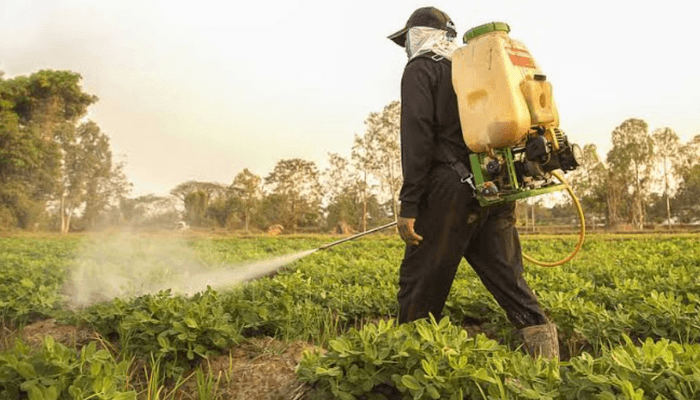
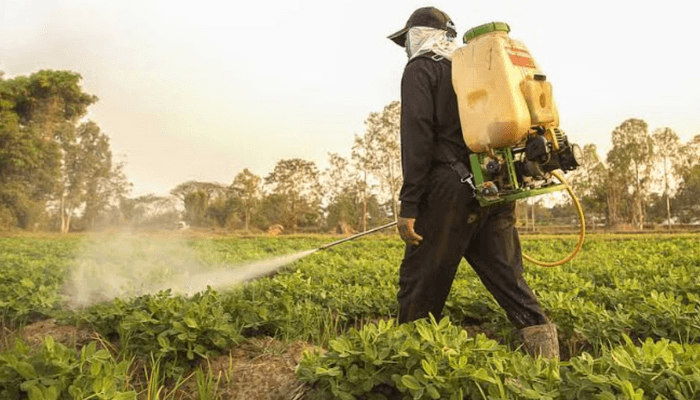
The widespread use of hazardous pesticides and agrochemicals by farmers and produce traders to control weeds, protect crops and preserve food is posing a serious threat to public health and the environment in Nigeria, experts have warned.Several of these chemicals many of which are banned or strictly regulated in other countries remain freely traded and commonly used across Nigerian farms and markets.
Highly hazardous pesticides in circulation include Atrazine, Butachlor, Dichlorovos, Carbendazim, Cypermethrin, Dimethoate, Diuron, Endosulfan, Glyphosate and Imidacloprid. Others are Carbofuran, Chlorpyrifos, Paraquat, Mancozeb and Permethrin, among many more.
According to the Alliance for Action on Pesticides in Nigeria (AAPN), at least 17 highly hazardous pesticides (HHPs) that have been banned in several countries are still found in the hands of Nigerian farmers.
Although the National Agency for Food and Drug Administration and Control (NAFDAC) has prohibited six of these substances, they continue to be sold and used nationwide.Experts say prolonged exposure to these chemicals especially through food can cause severe health complications, including hormonal imbalance, nervous system damage, cancer, developmental disorders and respiratory problems.
“When pesticides are applied beyond approved maximum residue limits on food products, they become extremely dangerous to human health,” said Prof. Joseph Akinneye of the Department of Biology, Federal University of Technology, Akure.
He explained that many farmers and traders apply agrochemicals excessively, leading to bioaccumulation in the human body over time. “This accumulation is linked to rising cases of cancer, breathing difficulties and endocrine disorders. This practice is wrong and must stop if lives are to be protected,” he said.
Akinneye stressed the need for sustained education of farmers and produce handlers on safe pesticide use, noting that poor awareness of the risks associated with highly hazardous chemicals is driving their misuse.
He added that while NAFDAC is legally responsible for regulating pesticide use in Nigeria, enforcement remains weak, as banned products are still readily available in open markets.
Rising Imports, Rising RisksData show that pesticide imports into Africa have increased sharply in recent years. In West Africa, imports nearly doubled within five years from 218,948 tonnes in 2015 to 437,930 tonnes in 2020. Nigeria accounted for 33.67 percent of total imports in 2020, according to AAPN.
A Pesticide Atlas report revealed that in 2021, nearly two-thirds (about 66 percent) of agrochemicals found in Nigeria were classified as highly hazardous.
The report also detected excessive pesticide residues in food samples. Tomatoes tested in Nigeria contained traces of permethrin, a chemical classified by the United States Environmental Protection Agency as “probably carcinogenic.
”Similarly, beans samples recorded dichlorvos residues of up to 0.3 milligrammes per kilogramme far exceeding the European Union’s legal limit of 0.01 milligrammes per kilogramme.
Health Experts Raise Alarm Patrick Ijewere, Medical Director of The Nutrition Hospital, said many agrochemicals commonly used in Nigeria contain active ingredients classified as highly hazardous by the World Health Organisation (WHO) and the International Agency for Research on Cancer.
“These chemicals are dangerous when consumed repeatedly over time. They are contributing to the increasing cancer burden in the country because Nigerians consume these contaminated food products daily,” Ijewere said.He added that the persistent overuse of agrochemicals has continued to hurt Nigeria’s agricultural exports.
Export Rejections PersistNigeria’s food exports have suffered repeated rejections due to pesticide contamination. In 2016, the European Union rejected 24 Nigerian food products, including groundnuts contaminated with aflatoxin and palm oil containing carcinogenic colouring agents.
Earlier, in 2015, the European Food Safety Authority rejected Nigerian beans after detecting dichlorvos residues ranging from 0.03mg/kg to 4.6mg/kg far above the permissible limit of 0.01mg/kg.
The ban remains in force, underscoring ongoing compliance failures.“The continued ban on our food products in Europe and other markets is directly linked to the high use of hazardous pesticides,” Ijewere noted.
Organic Alternatives Gaining Attention in response, experts are calling on governments at all levels to invest more in organic and agroecological farming systems as safer and more sustainable alternatives.
Prof. Jude Obi, President of the Association of Organic Agriculture Practitioners of Nigeria (NOAN), urged increased awareness and advocacy for organic agriculture while discouraging excessive reliance on synthetic agrochemicals.
He noted that many countries are transitioning toward organic pesticides and environmentally friendly farming methods due to their health, environmental and export advantages.