
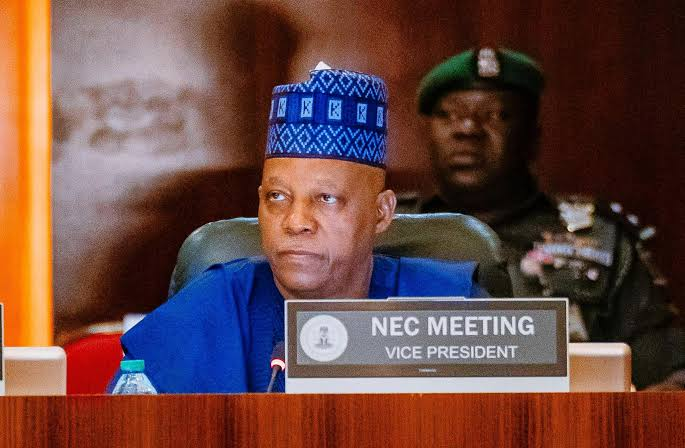
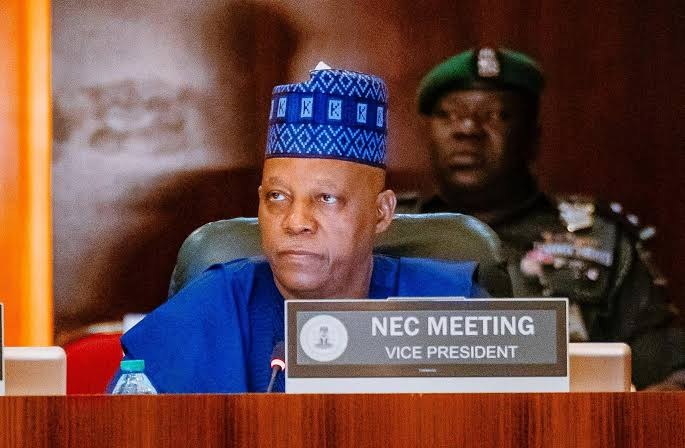
The National Economic Council (NEC) has inaugurated a dedicated committee on livestock development, marking a renewed push to accelerate the rollout of a national livestock production framework across the country.
The committee was approved on Wednesday at the 155th NEC meeting, chaired by Vice President Kashim Shettima and held virtually.
It is structured to reflect Nigeria’s geopolitical diversity, with one representative from each zone: Bauchi (North-East), Niger (North-Central), Ondo (South-West), Imo (South-East), Cross River (South-South), and Kebbi (North-West).
Also serving on the committee are the Ministers of Livestock Development; Agriculture and Food Security; Budget and Economic Planning; as well as the Senior Special Assistant to the President on Agribusiness.
NEC mandated the committee to review key recommendations of the Presidential Livestock Reform Committee (PLRC) alongside proposals submitted by the Ministry of Livestock Development. The team is also expected to identify states willing to participate in and implement the programme.
The move follows a directive by President Bola Tinubu at the Federal Executive Council meeting of December 10, instructing NEC to work closely with the Ministry of Livestock Development to produce a clear roadmap for transforming the livestock industry.
Following this directive, the ministry developed a proposal which was presented to NEC for endorsement, with the goal of repositioning Nigeria’s livestock sector as a modern, peaceful and commercially viable driver of national development.
Speaking at the meeting, Vice President Shettima said resolving the long-running farmer–herder crisis remains central to achieving food security in Nigeria.
According to him, food security is both an economic and moral responsibility, but can only be realised through practical, lasting and widely accepted solutions to conflicts between farmers and herders.
He expressed concern over the deep mistrust created by years of violence, noting that livestock production and farming once complementary and vital to rural economies had become sources of insecurity.
“The loss of lives, destruction of homes and devastation of farmlands must come to an end,” Shettima said, stressing that Nigeria cannot sustainably feed itself without addressing the root causes of the crisis.
The Vice President attributed the spread of violence to the prolonged mismanagement of tensions between farmers and herders, lamenting that a challenge of coexistence was allowed to degenerate into cycles of conflict across the country.
“What began as a localised problem has grown into a national nightmare, affecting every region, destroying livelihoods and weakening the trust that once bound rural communities together,” he said.
Shettima commended President Tinubu for taking decisive steps to reform livestock production and integrate the sector more firmly into the national economy. He urged state governors to give serious consideration to the presentations made by the Ministry of Livestock Development and the PLRC.
He also encouraged states to harness the sector’s vast potential for economic growth, conflict resolution and peacebuilding, noting that the establishment of a standalone Ministry of Livestock Development underscores the administration’s commitment.
The Vice President assured that recommendations from both the PLRC and the ministry would receive priority attention, while calling on sub-national governments to actively support implementation.
“The proposals before us offer critical insights into stabilising our food systems, restoring confidence in rural economies and reducing security pressures linked to competition over land and resources,” he added.
In his remarks to journalists after the meeting, the Minister of Budget and National Planning, Abubakar Bagudu, praised President Tinubu for creating the Ministry of Livestock Development.
He described livestock production as a major national economic activity with opportunities spread across all regions of the country.
“The real task is to recognise livestock as a modern economic enterprise and work collectively to support its transformation, boost national growth and eliminate conflicts associated with outdated practices,” Bagudu said.