
Nigeria’s effort to reduce its dependence on oil is increasingly anchored in agriculture. Non-oil exports are growing, local processing capacity is expanding, and millions of livelihoods are now tied to value addition rather than raw production. The transition is underway and it is tangible.
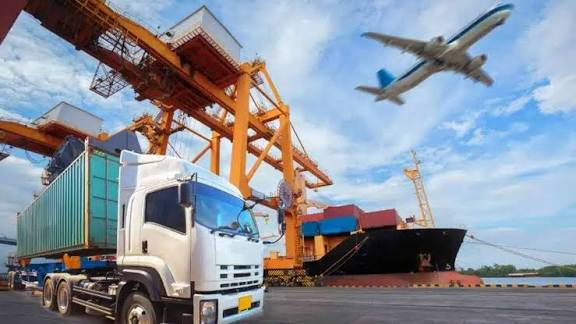
Valency Agro Nigeria’s journey points to what will define the next stage of this transformation. Growth will no longer be driven by how much land is cultivated, but by how efficiently produce moves from farm to factory and on to global markets. Where logistics, processing and export systems are deliberately integrated, agriculture becomes competitive and scalable.
As one of the country’s leading non-oil exporters and agro-commodity value chain developers, Valency has built an end to end operating model that connects smallholder farmers to international buyers. Its system spans aggregation, processing, warehousing, traceability, logistics and export. The result has been broader market access for farmers, better price discovery and improved quality standards across the supply chain.
The company’s emphasis on systems and standards has set it apart. Valency became the first company in Nigeria to secure organic certification for cashew production, demonstrating that Nigerian produce can meet stringent global requirements when infrastructure and processes are intentionally designed. Investments in modern warehouses, cold chain solutions, commodity traceability and export logistics reinforce a central message: agricultural competitiveness is driven by operations, not rhetoric.
Since launching operations in Nigeria as part of Valency International’s presence across 22 countries, the company has built substantial capacity in cashew processing and FMCG production. Its cashew kernel facility, with an installed capacity of 50 metric tonnes per day, places Valency among the most significant players in Nigeria’s cashew value chain.
Processing depth has enabled brand growth. Champion, Valency’s flagship FMCG brand, has gained traction in the domestic market and is expanding across ECOWAS countries. Its progress shows that Nigerian food brands can compete regionally when quality, consistency and disciplined market execution are in place.
A major milestone came with the commissioning of the Valency Industrial Park in Oyo State. The facility anchors the company’s next phase of growth and signals a strong commitment to local manufacturing. Its multi-seed, multi-oil plant in Ibadan designed with a soybean crushing capacity of 300 metric tonnes per day will broaden Nigeria’s processing base, supply edible oils to local and export markets, support thousands of farmers and create hundreds of direct jobs.
Beyond cashew and soy, Valency is positioning for expansion into sheanut and rubber commodities Nigeria produces in large volumes but has yet to fully industrialise. Global demand for sheanut in food and cosmetics is rising, while rubber holds strong potential for domestic manufacturing and exports. Applying an integrated value-chain model to these sectors could convert underutilised supply into sustainable foreign exchange earnings.
Location is as critical as crop selection. Northern Nigeria holds vast agricultural potential but experiences high post-harvest losses. Valency is exploring aggregation centres and processing facilities in key northern states to bring value closer to production areas. The goal is clear: cut losses, raise farmer incomes, reduce logistics costs and stimulate regional economies.
Investor response has reflected confidence in this approach. A recent ₦13 billion commercial paper issuance was oversubscribed by 18 per cent, underscoring market belief in Valency’s processing-led expansion strategy.
Nigeria’s agricultural processing sector would benefit from stronger public-private collaboration. Export incentive programmes signal intent, but their impact depends on efficient and predictable execution. Faster disbursement would unlock capital for infrastructure, farmer support and capacity expansion across the sector.
Beyond incentives, the fundamentals remain consistent: improved rural connectivity, access to long-term finance and stable, predictable regulation. These are not niche demands they are the building blocks of industrial-scale agriculture.
International partnerships also matter. Drawing on Valency International’s footprint across Africa and Asia, the Nigerian business is pursuing collaborations that enable technology transfer, advanced processing equipment and digital traceability. India, with its mature agri-technology ecosystem and growing appetite for African commodities, is a natural partner. Equally important is deeper intra-African collaboration shared infrastructure, regional processing hubs and coordinated supply chains to reduce imports and strengthen continental export competitiveness.
Scale without inclusion is unsustainable. Valency’s expansion strategy is rooted in linking farmers to markets, encouraging sustainable practices and ensuring fair pricing through its Farmer Relationship Management programme. Organic certification in cashew production reflects a broader commitment to environmental responsibility and global quality benchmarks.
This operational discipline extends to people and communities. Occupational health and safety, community engagement and carbon-footprint reduction are embedded alongside commercial objectives. For agricultural transformation to endure, it must create jobs especially for youth and women while strengthening food security and export credibility.
Nigeria’s agricultural future will be shaped by those willing to invest in systems rather than slogans. Infrastructure, processing, logistics and coherent policy will determine whether today’s diversification momentum translates into long-term competitiveness.
Valency Agro Nigeria is taking that long view, working with government, investors, technology partners and farming communities to build resilient, inclusive and globally competitive supply chains. The opportunity is evident. What remains is disciplined execution especially in addressing persistent challenges such as weak storage, fragmented transport, limited cold chains and inconsistent export handling, which continue to erode quality and constrain scale across the value chain.