
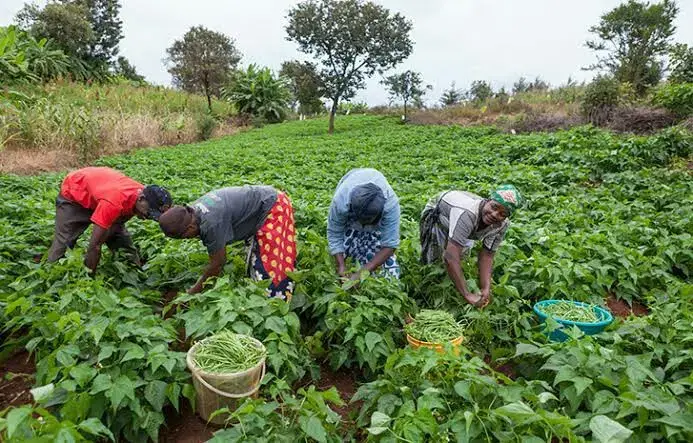
Agriculture experts across Akwa Ibom, Cross River and Rivers States have urged the Federal Government to urgently address transportation challenges, poor rural roads, weak storage systems and rising production costs if the recent drop in food prices is to be sustained.
Their concerns follow a market survey by the News Agency of Nigeria (NAN), which shows that prices of staples such as rice, garri, beans, yam, millet and maize have fallen in several markets, largely due to the harvest season and temporary government interventions.
Harvest Season and Import Waivers Driving Temporary Price Relief
According to the experts, the decline in prices is seasonal and policy-driven, not the result of long-term structural improvements in Nigeria’s food system.
Nigeria’s 150-day duty-free import window for essential food items flooded markets with cheaper imported rice, grains and processed foods. This, combined with peak harvests across major producing states, lowered prices in the short term.
For instance, in Rivers State:
- A 50kg bag of rice dropped from ₦85,000–₦100,000 to₦11,000 ₦45,000-₦60,000
- A basin of garri fell from ₦30,000 to ₦11,000
But experts warn that once the waiver ends, the market may experience sharp price rebounds.
Imported Food Influx Threatens Local Farmers
Port Harcourt-based produce off-taker Mr. Imam Ewang described the influx of cheap imports as dangerous to local agriculture.
“While consumers celebrate lower prices, farmers are counting losses. Agro-inputs and labour costs keep rising while imported substitutes crash local prices,” he said.
He emphasized that many farmers are forced to sell produce at giveaway prices due to lack of preservation and storage, adding that functional silos across the 36 states would have helped stabilise prices and reduce wastage.
Poor Roads, High Transport Costs Still Driving Food Inflation
Across the South-South, poor rural roads and expensive interstate transportation remain major barriers to stable food supply. In Akwa Ibom, Cross River and Rivers, traders say transport now accounts for up to 40% of final food prices.
Mrs. Hamzat Ahmed, a Port Harcourt yam trader, said:
“When a trader spends more on transport than on the goods, the consumer will suffer the price. Without cheaper transport especially rail the price drop cannot last.
”Nigeria’s unstable fuel prices also complicate distribution. In many states, petrol retail prices fluctuate by the day, pushing up logistics costs and retail food prices.
Storage Deficit: Nigeria Loses 25% of Food at Harvest
Economist Mr. Richard Inoyo noted that Nigeria’s biggest threat is not shortage of food production but post-harvest losses, largely caused by poor storage and handling.
Research from the FAO and Nigeria’s Ministry of Agriculture show that the country loses 20–40% of its agricultural output annually due to poor storage, inadequate processing facilities, and bad roads.
“Nigeria loses up to 25% of its food at farm level. We need modern silos, rural feeder roads, cold-chain systems, and processing hubs,” Inoyo said.He warned that without solving storage and logistics, Nigeria will continue to experience price spikes between seasons.
Market Prices Across the Region: What Traders Are Seeing
Akwa Ibom (Uyo, Akpan Andem Market)
- Train farmers on produce handling and marketing
- 50kg parboiled rice: ₦70,000–₦75,000 (down from ₦80,000+
- Garri: ₦1,000 per 10 cups (up from 8 cups previously)50kg
- garri: ₦35,000–₦40,000 (down from ₦50,000–₦55,000)Beans (100kg): ₦125,000 (down from ₦140,000)
- Spaghetti: ₦15,000 per carton (down from ₦17,500)Noodles: ₦8,000 per carton (down from ₦8,500 Cross River
- Guinea corn: ₦2,800 per custard bucket (down from ₦4,000)
- Millet and maize: ₦2,500, previously over ₦3,000
- Fix rural feeder roadsExpand national rail cargo operations
- Honey beans: ₦100,000 per bag (down from ₦250,000 in December)
- Rivers (Port Harcourt)A basin of garri: ₦11,000 (down from ₦30,000)Rice: ₦45,000–₦60,000 (previously ₦85,000–₦100,000)
- Despite these declines, items not in season—such as palm oil, honey and ogbono—remain expensive. Experts: Price Drop is Not Sustainable Without Structural Fixes
- “The drop in food prices is temporary. Fuel price instability will always push food distribution costs up—and consumers will ultimately bear that burden,” he said.
- Stakeholders across the region highlighted several steps needed to maintain lower food prices
- 1. Prioritize transport reforms
- Reduce logistics bottlenecks at state borders
- Expand community-level processing centres
- 2. Invest heavily in storage and processing
- Build functional silos in all states
- Provide cold-chain storage for perishables
- 3. Reduce post-harvest lossesIntroduce solar-powered dryers, hermetic storage bags and improved crating
- 4. Stabilise fuel prices
- Strengthen regulatory oversight
- Expand gas-powered and electric transport alternatives for agriculture
- 5. Support local farmers
- Expand input subsidies
- Reduce cost of credit
- Support mechanisation clusters and cooperative farming
- 6. Reform import policies
- Ensure imports do not suppress local production
- Introduce safeguards to protect farmers during waiver periods
- Nigerias Still Struggling With Cooking Gas Price
- While celebrating reduced food prices, many residents expressed concern about rising cooking gas costs. Retail prices have climbed to ₦1,600–₦1,800 per kg, making it difficult for low-income households to balance feeding and energy costs.
- Bottom Line Experts across the South-South agree on one key message:Nigeria cannot maintain lower food prices without fixing transport, storage, logistics and fuel instability.
- Until these structural issues are addressed, the country will continue to experience seasonal relief followed by fresh spikes in food prices.