
By AgroBroadcast News | Ilorin | November 2025
Stakeholders in Nigeria’s agricultural sector have renewed calls for improved agricultural mechanisation as a pathway to achieving national food security, self-sufficiency, and economic stability.
They made the call on Wednesday during the 50th Anniversary Celebration of the Nigerian Institution of Agricultural Engineers (NIAE), held at the National Centre for Agricultural Mechanisation (NCAM), Ilorin. The event also marked the 25th NIAE International Conference, the 45th Annual General Meeting (AGM), and the National Agricultural Machinery Exhibition.
Nigeria’s Mechanisation Gap Still Deep
Despite its vast arable land and population of over 230 million, Nigeria continues to rely heavily on manual and semi-mechanised farming tools, a trend experts say is stifling productivity.
According to the Food and Agriculture Organization (FAO), Nigeria’s tractor density is currently less than 0.3 horsepower per hectare, far below the 1.5 horsepower per hectare recommended for developing economies. By contrast, countries like Brazil and India average over 2.0.
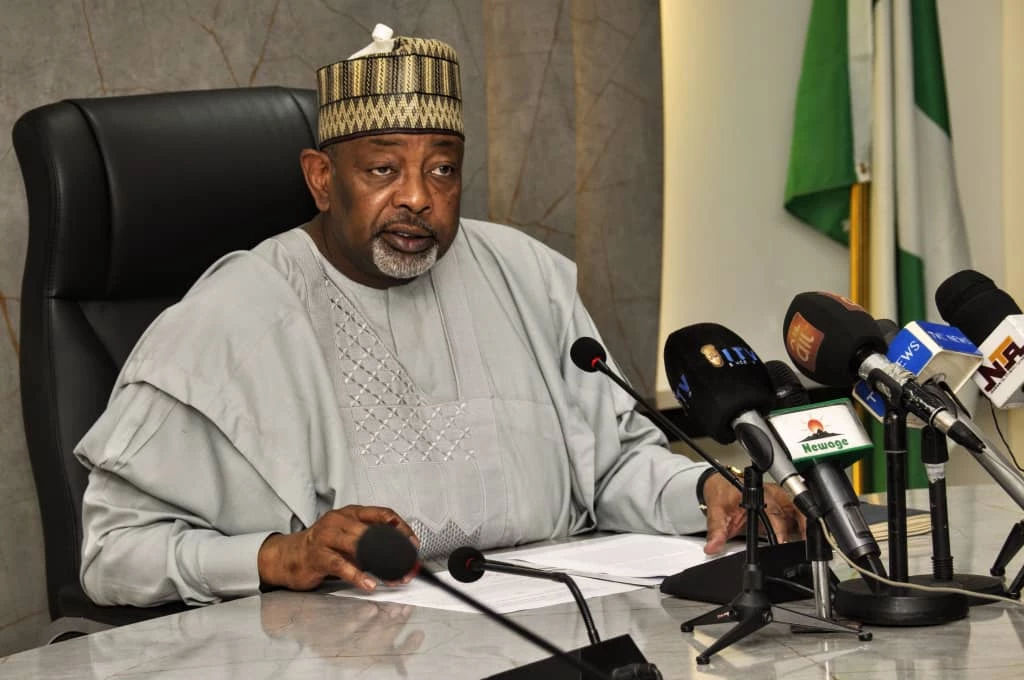
Dr. Adamu Dabban, Executive Secretary of the Agricultural Research Council of Nigeria (ARCN), said the nation cannot achieve sustainable food security without transitioning from hand tools to large-scale mechanisation.
“Our engagement in mechanisation is still very low. We need to stop using hoes and cutlasses and adopt machines, equipment, and modern technologies to transform our farming practices,” Dabban stated.
“If we are serious about ending food insecurity, feeding our population, and even producing for export, we must industrialise agriculture.”
Making Farming Attractive to Youths
One of the recurring themes at the conference was the urgent need to make agriculture attractive to young Nigerians.
Engr. Oluwole Ogunjini, Co-chairman of the conference’s Central Organising Committee, noted that mechanisation reduces the physical drudgery that discourages youth participation.
“The major reason young people are not interested in farming is because it’s seen as hard labour,” Ogunjini explained.
“But if they have access to technologies like tractors, planters, and threshers, agriculture becomes a modern, profitable venture.”
He added that with increased local production of farm machinery, the sector could witness a surge in youth-led agribusiness startups, rural employment, and innovation in precision farming.
Locally Developed Machinery Offers Economic Promise
This year’s NIAE exhibition featured locally developed agricultural machines, including mini-tractors, grain threshers, and solar-powered irrigation kits. Ogunjini said these innovations, created by Nigerian engineers, could have ripple effects on the national economy by reducing import dependence and improving maintenance accessibility.
“Locally produced technologies can be serviced easily, creating jobs for local technicians and reducing costs for farmers,” he said.
The National Centre for Agricultural Mechanisation (NCAM) reports that Nigeria imports about $100 million worth of agricultural machinery annually, but local innovation could cut that figure by more than half within five years if properly funded.
Women in Mechanisation: A Call for Inclusion
Mrs. Taiwo Kehinde, National Coordinator of Women in Agricultural and Bio-Resource Engineering in Nigeria (WABEN), called for greater inclusion of women engineers in decision-making processes within the mechanisation sector.
“Women make up a large portion of farmers who produce, harvest, and process food, yet most machines are not designed with them in mind,” she noted.
“If women engineers are not at the decision table, they cannot influence designs or policies that affect women farmers.”
Kehinde stressed the need for small-scale, gender-friendly technologies adaptable to rural conditions — such as lightweight planters and mobile threshers that women can use efficiently.
Data Snapshot: Nigeria’s Mechanisation Reality
- Tractor-to-farmer ratio: 1 tractor to every 5,000 farmers, compared to India’s 1:500 (AfDB, 2025).
- Post-harvest loss: Estimated at 30–40% of produce yearly due to poor mechanisation and storage.
- Youth participation: Only 23% of Nigerian farmers are under 35, highlighting the need for technological appeal.
- National agricultural equipment deficit: Over 750,000 tractors required to meet optimal mechanisation needs.
Looking Ahead: From Talk to Implementation
Experts say Nigeria’s mechanisation drive must be backed by consistent policy implementation, investment in rural infrastructure, and financial models that make machinery accessible.
The African Development Bank (AfDB) recently announced a $520 million Agricultural Transformation Support Programme for Nigeria, which includes mechanisation clusters and tractor-leasing hubs in collaboration with private investors.n
If fully implemented, the plan could expand mechanised coverage from 25% in 2025 to 60% by 2030, potentially saving over $2 billion annually in food imports.
Conclusio
The Ilorin conference underscored a growing consensus: without mechanisation, Nigeria’s dream of food sovereignty and self-sufficiency will remain elusive.
By embracing technology, empowering women and youth, and investing in local innovation, Nigeria could finally transition from subsistence farming to a competitive, export-oriented agricultural economy.
“Mechanisation is not just about machines,” Dabban concluded. “It’s about transforming agriculture into a business that works for farmers, the economy, and the nation.”