
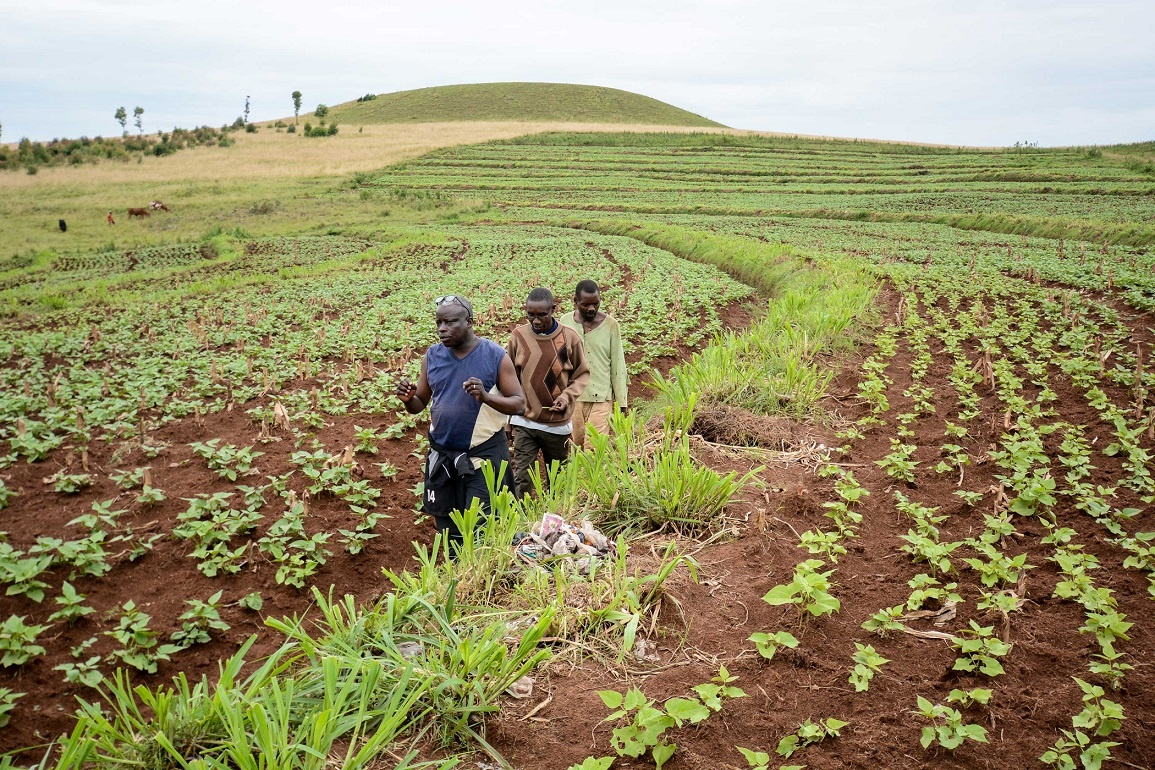
Farmers across Zamfara State and Sokoto State are increasingly alarmed by renewed banditry at a critical time — the harvest of maize, rice and other staple crops — and are appealing to the federal and state governments to step up protection.
Harvest boom — and mounting threats
Local officials say that this season has produced a “bumper harvest” in several rural communities of both states. In Zamfara, for example, the traditional title-holder Kabir Ibrahim, the Sarkin Noman Mayanchi in Maru Local Government Area, reported that farmers had achieved high yields but are now unable to harvest freely. He noted that “bandits are demanding payments from rural communities or threatening to prevent access to farmlands.”
Similar reports come from Sokoto. In Shinkafi LGA of Zamfara, farmers say some villages are forced to forfeit part of their crops to armed groups just to gain access to harvest. One local farmers’ leader, Adamu Bazamfare, said farmers are afraid to cultivate, and those who did are encountering harvest-time extortion.
Banditry: Extortion, kidnapping and farmland access
Recent investigations corroborate these farmers’ concerns. A report found that across eastern Isa and Sabon Birni Local Government Areas in Sokoto, as well as Shinkafi LGA in Zamfara, some 34 communities were forced to pay what the gang led by notorious figure Bello Turji calls “peace levies” in exchange for farmland access.
Moreover, there have been numerous confirmed attacks. For example:
- In Zamfara’s Talata Mafara district, nine farmers were killed and about 15 abducted during a motor-cyclist bandit assault.
- In Sokoto’s Lugu town (Isa LGA), bandits killed 12 farmers in an attack claimed to be linked to Turji’s gang.
- Troops of Operation FANSAN YAMMA have rescued kidnapped victims and recovered ransom money and livestock in operations across both states, highlighting the scale of the challenge.
These realities underscore a pattern where farmers — already vulnerable — are being forced into paying for access or abandoned harvesting altogether.
Impact on agriculture and food markets
The fallout is multi-fold. Farmers in these states report:
- Fear of going to their fields, reducing actual harvested area.
- Being forced to pay levies or yield part of their harvest to armed groups.
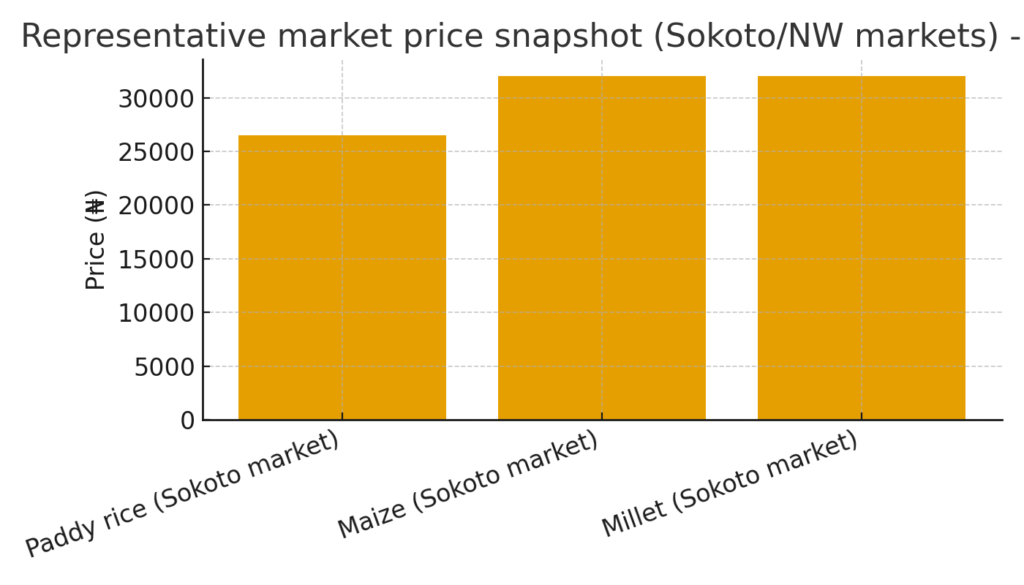
- Low commodity prices despite good yields, due in part to over-supply and import competition. In Kebbi State, for example, a bag of paddy rice fell from ~₦45,000 last year to ~₦25,000–₦28,000 this year.
- Lack of proper storage leading to post-harvest losses of up to 30 % in some communities.
As one farmers’ association leader in Kebbi put it: “We had a good yield but insecurity prevented many from harvesting what they had cultivated.”
Farmers’ demands and what they want
In both states farmers are calling for:
- Increased deployment of security personnel (army, police, local task forces) to secure farmlands and harvest corridors.
- Subsidies or support to reduce the cost of inputs such as fertiliser and seed, so agriculture remains viable despite the risks.
- Improved post-harvest infrastructure (silos, warehouses) to reduce losses and stabilise incomes.
- Policymakers to rethink food-importation policies that undercut local farmers and discourage active cultivation.
What the authorities are doing — and what remains to be done
Government responses have included military operations against bandits: in September 2025, troops reportedly recovered over ₦23 million believed to be ransom payments, and recovered stolen livestock from hideouts in Zamfara and Sokoto.
Nevertheless, farmers say this is not enough. What they need most is sustained presence and protection during the harvest window (typically September to December) when large numbers of farmers are vulnerable on the fields. They also point out that even when produce is harvested, poor infrastructure and low prices undermine their returns.
Conclusion
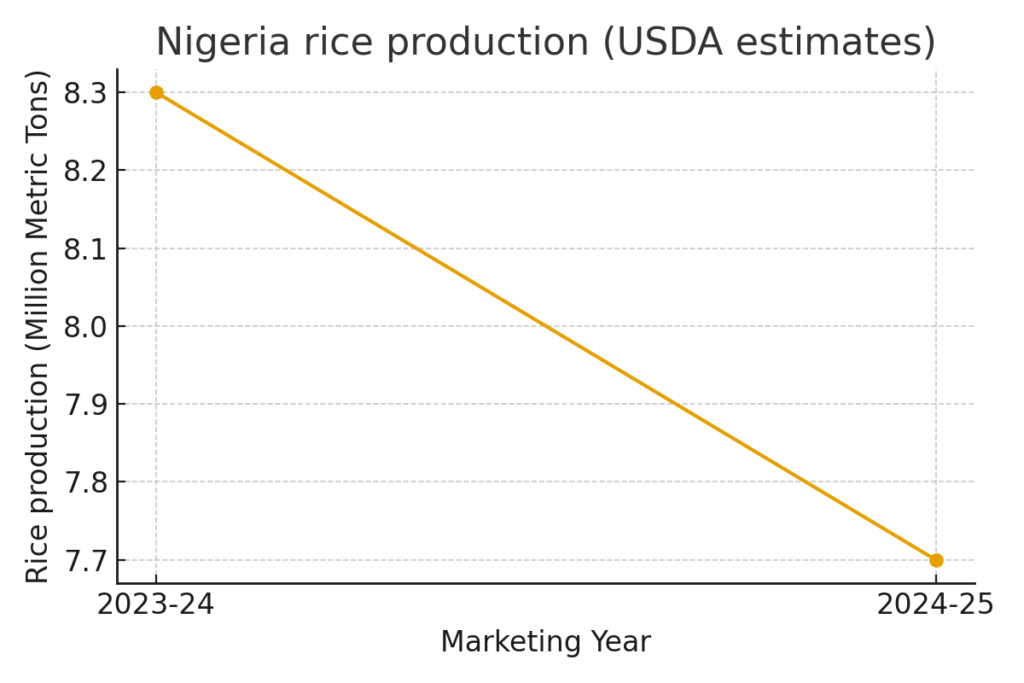
With a near-record harvest reported in parts of north-west Nigeria, the paradox is stark: abundance on the fields, yet fear and extortion blocking full realisation of that potential. Farmers in Zamfara and Sokoto are pleading for action — not just to harvest their crops, but to secure the livelihoods that depend on them.
They say: give us security, protect our harvest — and we can feed the region, stabilize incomes, and bolster food supply.